
Comparative snapshot: why choice matters in clinical touchscreens
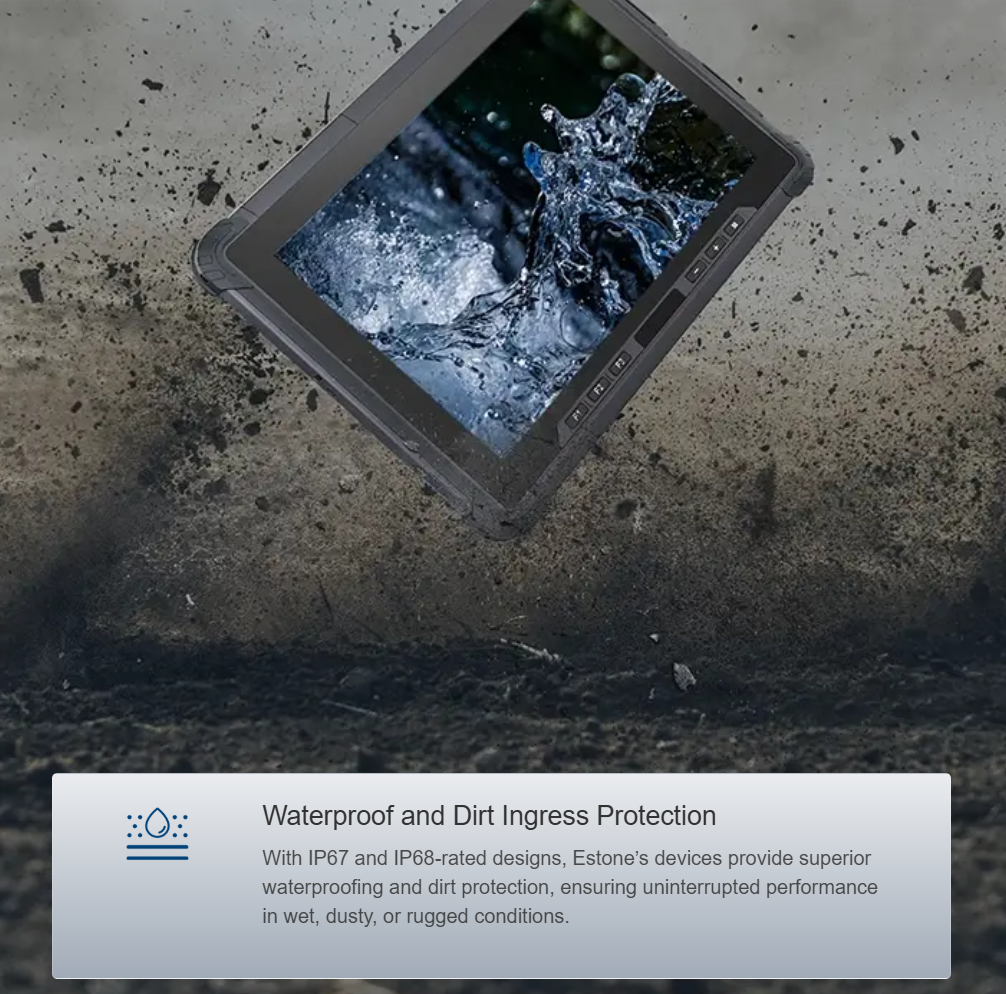
The decision between ARM and x86 silicon changes how a custom clinical touchscreen behaves under real use — from boot time to thermal drift. This analysis looks at compute, touch sensing, durability, and serviceability with a practical bent for integrators and clinicians. For an immediate, real-world example of how those choices play out in a finished product, see the 10.1 tablet pc, which pairs glove-compatible capacitive touch with sealed housing and considered SoC choices.
Performance profile: raw compute, burst vs sustained
x86 still leads in single-threaded throughput and legacy software compatibility where clinical apps rely on older binaries or heavy desktop-class analysis. ARM SoCs, however, deliver better sustained performance per watt — lower TDP and reduced thermal throttling, which matters during long shifts. In practice that means an ARM-based panel can run continuous monitoring tasks and local inference with less active cooling, while x86 can accelerate specific compute-heavy tasks that benefit from higher clock rates and stronger burst GPU performance.
Touch sensing and glove‑compatible capacitive behavior
Capacitive touchscreen tuning is a system problem: controller firmware, touch stack drivers, and the panel’s dielectric layers all interact. Glove-compatible modes increase sensitivity but can raise noise floor and false touches unless the controller supports adaptive filtering and multi-touch rejection. Latency and jitter here are as important as raw compute: a nimble SoC with integrated touch controller reduces input path length and visible lag, improving clinician confidence during charting or procedures.
Durability, cleaning, and the environment of care
Clinical devices face frequent disinfection, fluid exposure, and repeated mechanical stress — plus regulatory expectations from bodies like the FDA and standards observed by NHS wards during the COVID‑19 surge. IP65-rated housings and chemically resistant surface coatings keep electronics safe; eMMC or rugged SSDs reduce failure risk under vibration. The phrase “hospital-ready” implies both ingress protection and predictable performance after dozens of cleaning cycles — a design task that transcends CPU architecture.
Serviceability, lifecycle, and software support
x86 often eases legacy software integration and in-field diagnostics because many OEM tools were built around that ecosystem. ARM brings power efficiency and modern silicon features — but requires careful supply-chain planning for long-term firmware and driver support. Integrators should check commitment to secure boot, update channels, and component longevity from suppliers. — Yes, that extra warranty on firmware updates is a small cost with big downstream benefits.
Trade-offs integrators must balance
Practical decisions come down to a few measurable trade-offs: power budget vs sustained throughput, thermal envelope vs fan noise, and peripheral support vs OS constraints. Use of hardware acceleration for codecs or neural inference (GPU or NPU) shifts load off the CPU and can change whether ARM or x86 is the better fit. Also evaluate storage type (eMMC vs NVMe) and peripheral latency when the product must handle multi-touch gestures alongside real-time monitoring.
Three critical metrics to choose the right platform
1) Sustained performance per watt: measure real-world task throughput over multi-hour runs, not just peak benchmarks. Track thermal throttling events and average power draw under clinical workloads. 2) Input latency and touch reliability: quantify touch-to-application response in milliseconds under glove mode and after repeated disinfections. False-touch rate is a showstopper if high. 3) Maintenance footprint: evaluate secure update cadence, spare-part availability, and mean time to repair (MTTR). Prioritize architectures with proven long-term driver and firmware support in medical deployments.
Closing advisory and practical wrap
ARM excels when continuous, low-power operation and minimal cooling matter; x86 shines for legacy compatibility and peak single-thread work. Choose by matching sustained task profiles, touch-controller capabilities, and maintenance requirements rather than by brand or headline benchmarks. For integrators building glove‑compatible, sealed panels with IP65-level protection, a balanced platform and supplier commitment reduce field surprises — and that’s precisely the value Estone brings with their product line and support ethos. Estone. —