
The Hook
Choosing the right 3D printing conference in 2026 is difficult because events differ substantially in purpose, audience, technical depth, and commercial focus. Some emphasize exhibitions and supplier discovery, while others prioritize academic research, hands-on learning, professional networking, or healthcare and industrial applications. Event schedules, locations, submission deadlines, and exhibitor programs may also change, so a conference that suits a manufacturing buyer may not suit a researcher or first-time attendee. This guide reviews six listed options using information published by the event organizations and their official websites. The options have been compared by program emphasis, stated features, audience relevance, and practical networking value rather than by promotional claims alone. Readers should confirm final dates, venues, registration terms, and agendas directly with each organizer.
Full List of Top 6 Brands
- TCT Asia
- Rapid.Tech 3D
- RAPID + TCT
- C2P Forum
- Additive Manufacturing Users Group
- 3D Printing Conferences
Comparison Table
| Brand | Key Products | Key Features | Best For |
|---|---|---|---|
| TCT Asia | 3D printing and additive manufacturing exhibition and conference programming | Technology-focused event discovery, industry presentations, and supplier networking | Professionals seeking broad additive manufacturing exposure in Asia |
| Rapid.Tech 3D | Industrial additive manufacturing event programming | Keynotes and presentations covering technologies, materials, and industrial applications | Attendees interested in industrial AM knowledge and focused technical conversations |
| RAPID + TCT | Conference, exhibition, showcases, and awards programming | More than 400 product and service providers, specialized showcases, and more than 160 technical presentations | Manufacturing, aerospace, healthcare, startup, and service-provider discovery |
| C2P Forum | Research conference, keynote sessions, technical presentations, and panels | Global expert participation, abstract submissions, workshops, and cross-sector AM topics | Researchers, engineers, healthcare professionals, and academic contributors |
| Additive Manufacturing Users Group | AMUG Conference sessions, workshops, keynotes, and Innovators Showcase | 100+ technical sessions, hands-on workshops, interactive learning, and scholarships | Users seeking practical knowledge-sharing and hands-on AM education |
| 3D Printing Conferences | 3D printing and additive manufacturing conference programming | Innovation, design, future technology, CPD-accredited topics, and healthcare coverage | Professionals exploring technology trends, design, and healthcare applications |
Detailed Reviews
1. TCT Asia
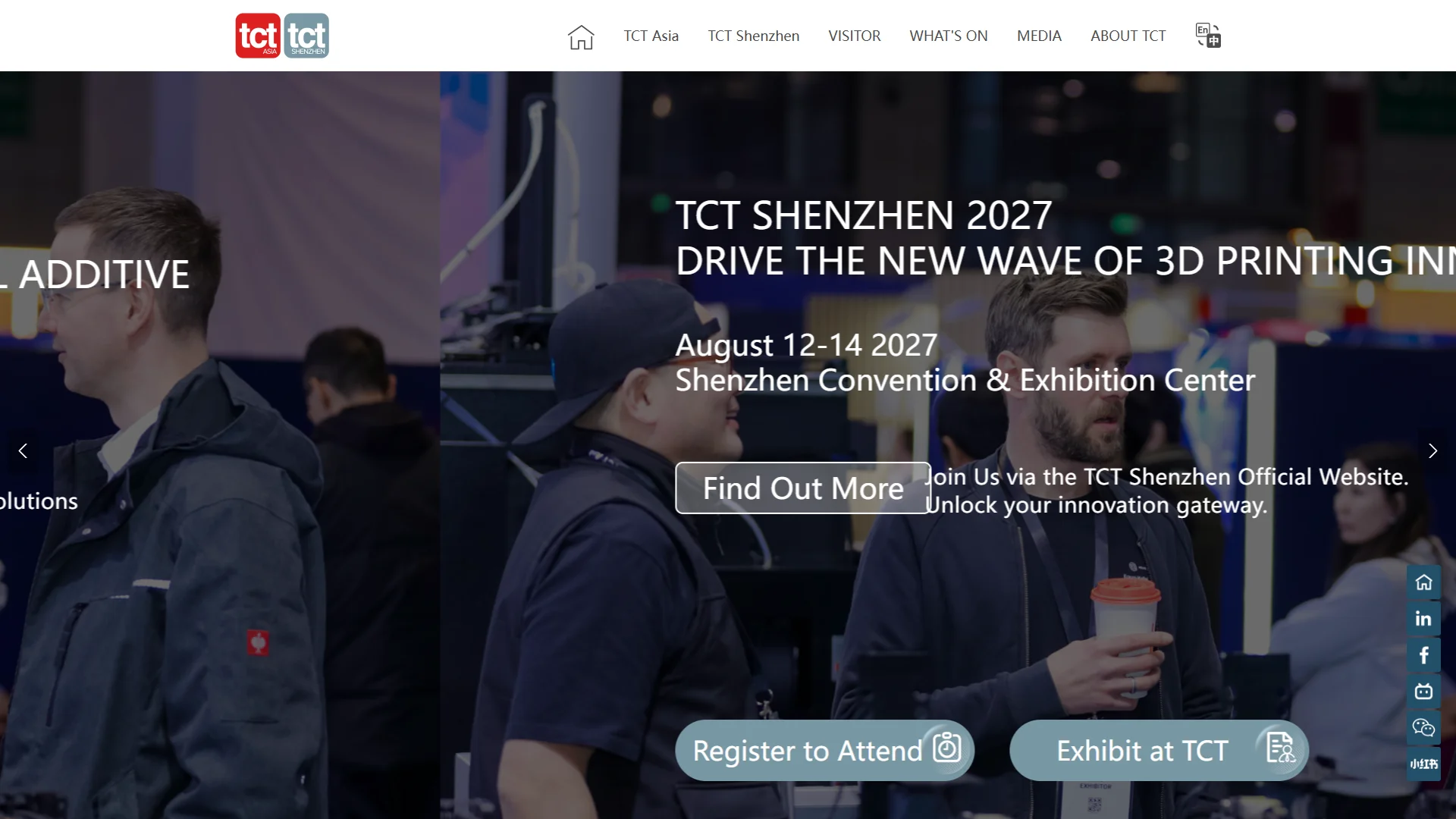
Overview: TCT Asia is presented through its official website as a dedicated event platform for 3D printing and additive manufacturing. The event is relevant to professionals evaluating technologies, materials, applications, suppliers, and emerging production workflows. Its position at the top of this list reflects the breadth expected from a large industry-focused conference and exhibition, while specific 2026 agenda details should be verified through the organizer’s official channels.

The event format is suited to visitors who want to combine conference learning with direct exposure to companies and technologies. That combination can be useful when a team is comparing manufacturing approaches, researching potential partners, or assessing how additive manufacturing fits into a wider production strategy. Because event schedules and exhibitor rosters can change, attendees should consult the official TCT Asia website for confirmed dates, venue information, registration, speaker announcements, and exhibitor details.
Positioning and scope: TCT Asia focuses on the 3D printing and additive manufacturing ecosystem rather than a single machine category. The event can therefore serve several professional groups, including technology buyers, engineers, designers, manufacturers, service providers, researchers, and investors. The most relevant value depends on the published program: a buyer may prioritize supplier meetings and demonstrations, while a technical attendee may focus on conference sessions and application case studies.
Products and materials covered: As an event rather than a printer manufacturer, TCT Asia’s “products” are its exhibition, conference, presentations, demonstrations, and networking opportunities. The official event information should be used to confirm which printer technologies, software systems, materials, post-processing solutions, and service providers are represented in a particular edition. Readers should avoid assuming that every material or process is available unless it appears in the current exhibitor or agenda information.
Pros / Key Features:
- Broad relevance to 3D printing and additive manufacturing professionals.
- Potential to combine technical education with supplier and partner discovery.
- Useful setting for comparing technologies and applications in one event environment.
- Official online event information provides the appropriate source for current program and registration details.
Use Cases / Best For: TCT Asia is best suited to professionals who want a broad view of additive manufacturing, particularly those comparing equipment, materials, software, production services, or industrial applications. It may also suit companies seeking regional business development and researchers looking for an industry-oriented setting. Attendees with a narrow research topic should first check the conference agenda to confirm that the relevant technical track is included.
2. Rapid.Tech 3D
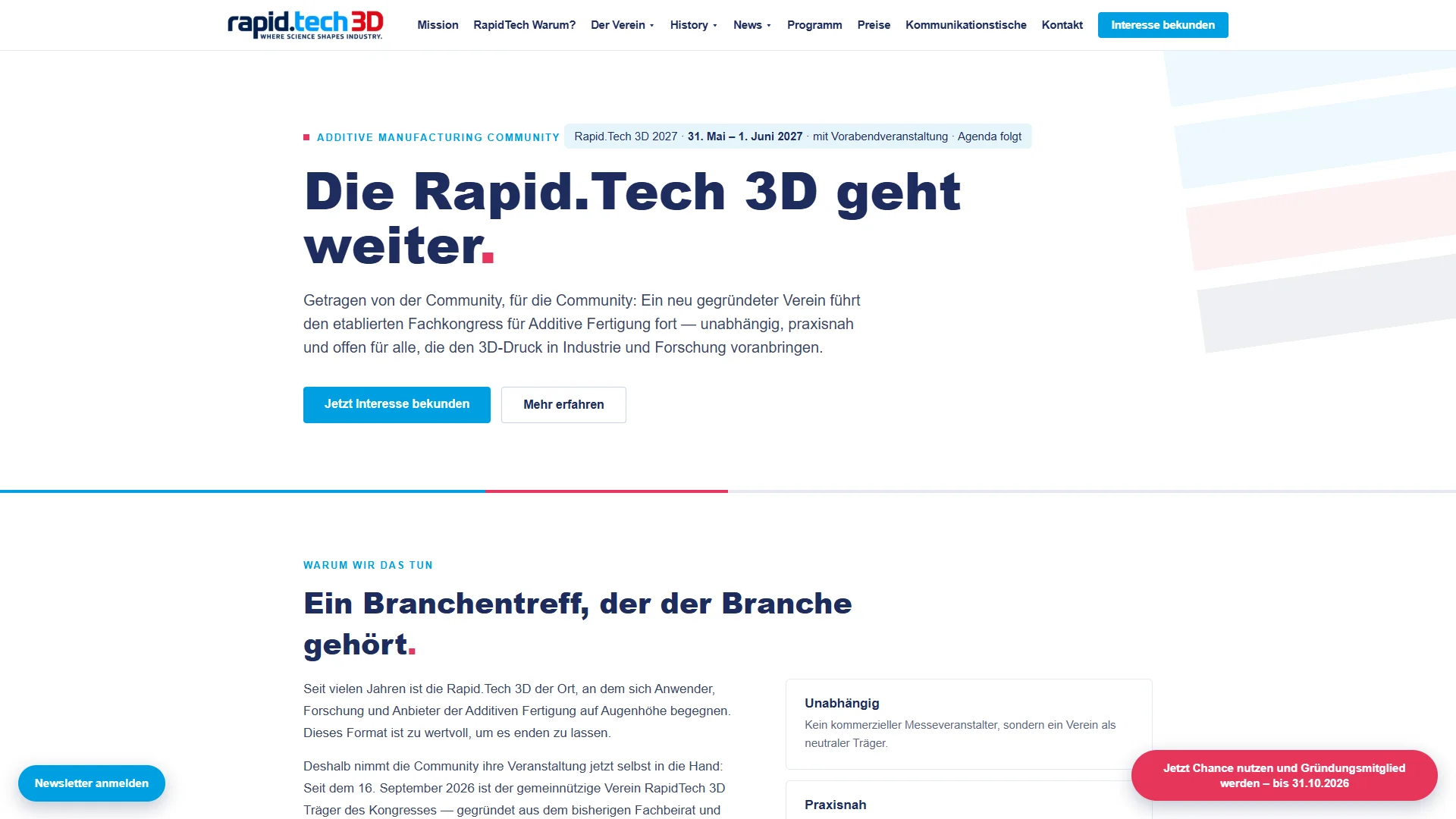
Overview: Rapid.Tech 3D is an additive manufacturing event whose published materials emphasize keynotes and presentations about technologies, materials, and industrial applications. The available official information does not clearly establish additional company background details such as founding year, location, or business model, so those points are not inferred here.
Pros / Key Features:
- Focus on additive manufacturing technologies and industrial applications.
- Coverage of materials through keynotes and technical presentations.
- Communication tables are positioned as an alternative to traditional exhibition stands, supporting direct professional conversations.
- Partner participation is offered through communication-table packages according to the published event information.
Use Cases / Best For: Rapid.Tech 3D is a reasonable choice for attendees who value concentrated technical discussion, industrial AM topics, and direct conversations with participating organizations. It may be particularly relevant to engineers, materials specialists, manufacturers, and suppliers seeking a focused event format. The official website should be checked for the current program and participation conditions.
3. RAPID + TCT
Overview: RAPID + TCT combines a conference and exhibition format. Its official event information describes specialized showcases intended to help visitors find relevant suppliers and solutions, including aerospace and defense, healthcare applications, startups, and local additive manufacturing service providers.
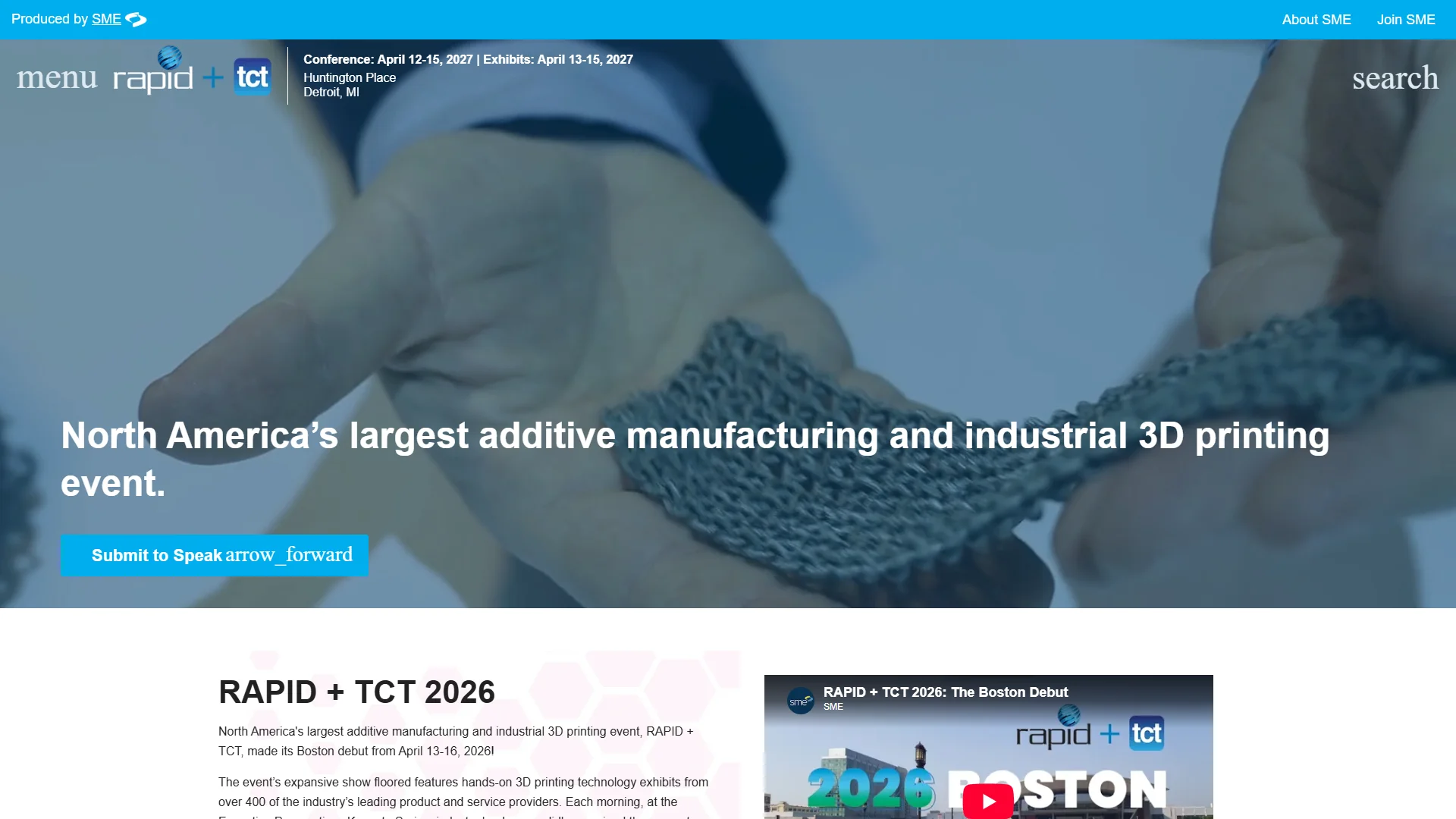
The event’s published information states that the show floor includes hands-on 3D printing technology exhibits from more than 400 product and service providers and that the conference features more than 160 technical presentations. These figures are edition-specific and should be reconfirmed for the 2026 program.
Pros / Key Features:
- Large exhibition environment with product and service-provider participation.
- Specialized showcases for sector-specific discovery.
- Technical presentations led by selected industry experts.
- Coverage of the transition from prototyping and small production runs toward mass manufacturing.
- AM Awards and TCT Awards programming is described in the supplied official event information.
Use Cases / Best For: RAPID + TCT is best for professionals who want to compare industrial solutions, meet suppliers, examine application examples, and follow manufacturing trends. It can be especially useful for teams working in aerospace, defense, healthcare, automotive, production engineering, or additive manufacturing services.
4. C2P Forum
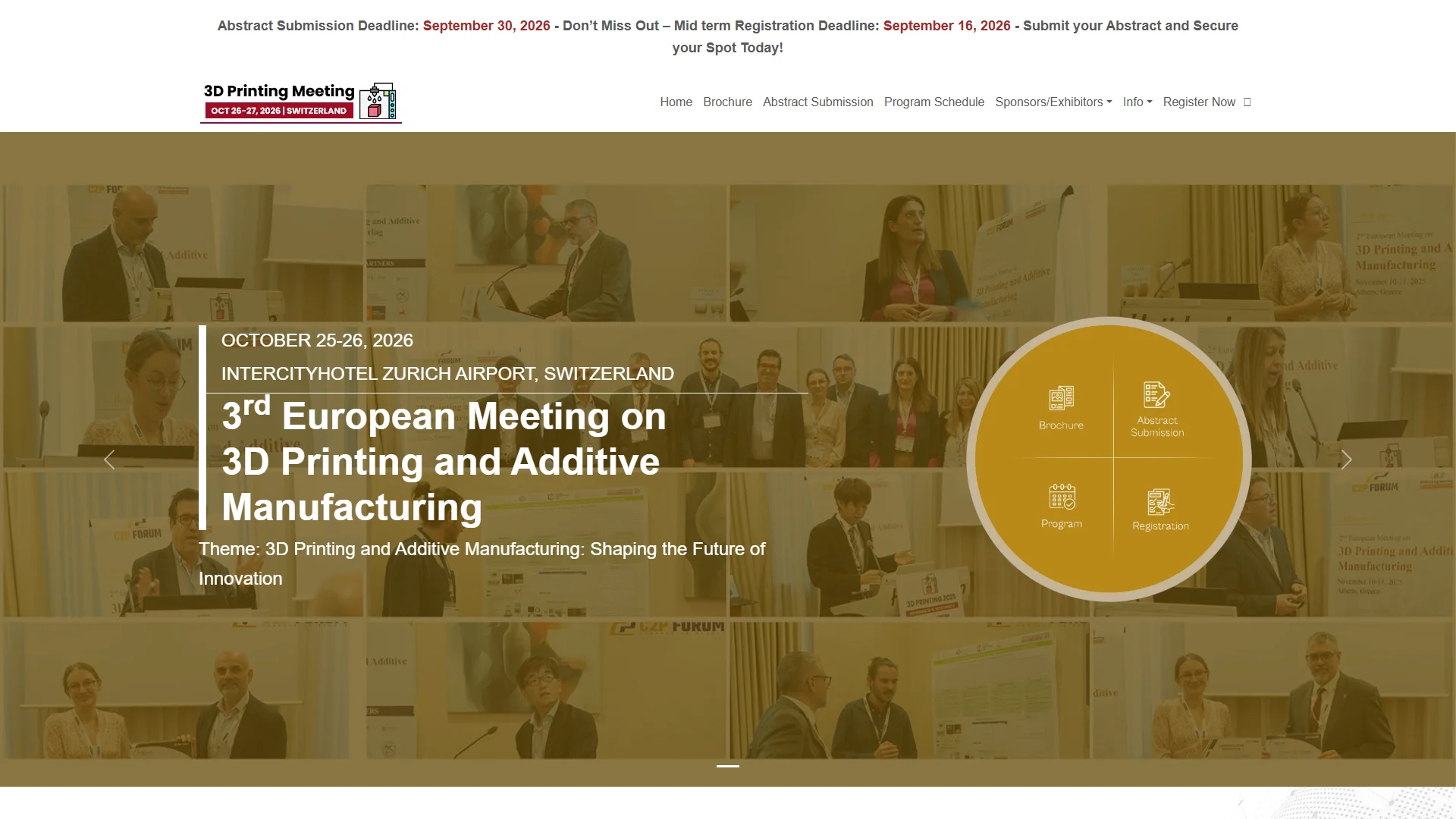
Overview: C2P Forum presents itself as a research-oriented 3D printing and additive manufacturing forum. Its published description emphasizes international experts and researchers sharing scientific findings and technological innovations. The 2026 information supplied for the event identifies abstract and registration deadlines, although participants should verify the current schedule directly with the organizer.
Pros / Key Features:
- Keynote speeches, technical sessions, and panel discussions.
- Topics including additive microfabrication, 4D printing, advanced materials, design, and optimization.
- Relevance to healthcare, aerospace, automotive, architecture, engineering, and construction applications.
- Opportunities for networking and collaboration on research projects.
- Workshops intended to support skills development and new techniques.
Use Cases / Best For: C2P Forum is best suited to researchers, engineers, academics, healthcare professionals, and industry specialists who want to present or discuss technical work. It is also relevant to attendees interested in cultural heritage, art conservation, construction, medical applications, and advanced manufacturing research.
5. Additive Manufacturing Users Group
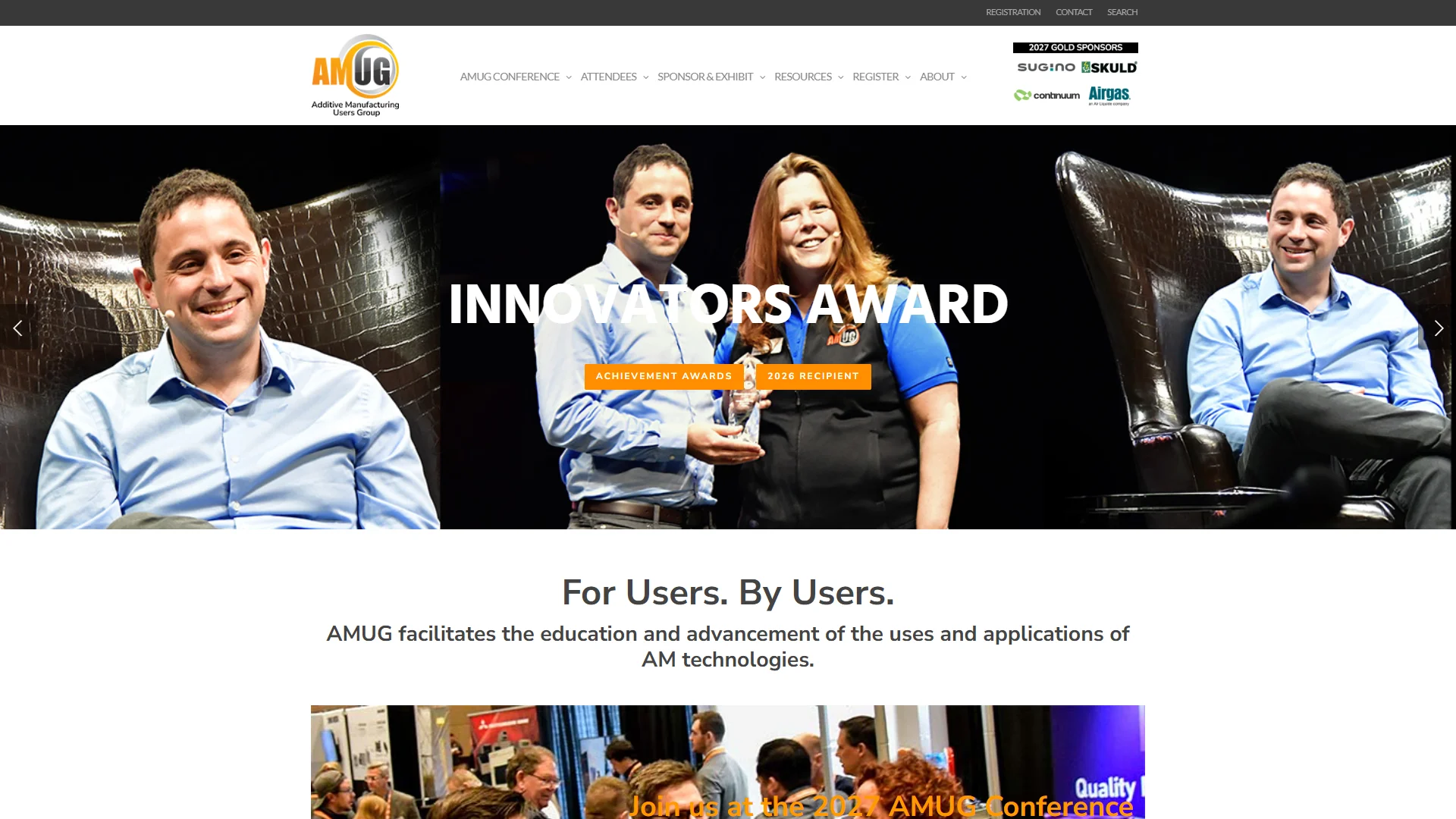
Overview: Additive Manufacturing Users Group organizes the AMUG Conference, which is structured around user education and practical knowledge exchange. The published information highlights technical sessions, hands-on workshops, keynotes, and an Innovators Showcase.
Pros / Key Features:
- More than 100 technical sessions are identified in the supplied event information.
- Hands-on and interactive workshops throughout the conference.
- Keynote presentations and an Innovators Showcase.
- Scholarships for one student and one educator are described by the organization.
Use Cases / Best For: The Additive Manufacturing Users Group is best for people who already use, manage, research, or implement additive manufacturing and want practical peer learning. It may be a strong fit for engineers, technicians, educators, students, and production teams seeking hands-on sessions rather than a purely academic conference.
6. 3D Printing Conferences
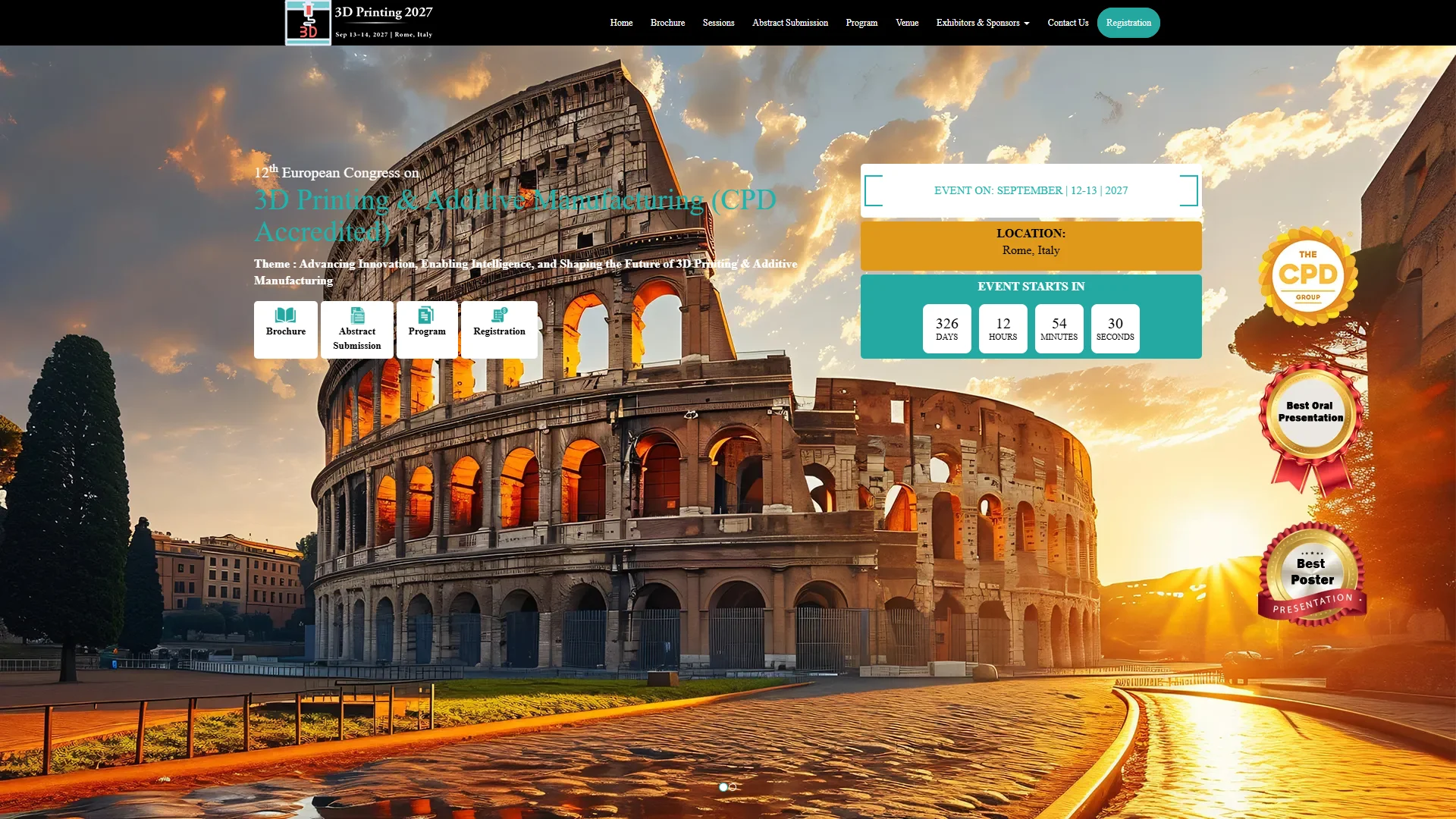
Overview: 3D Printing Conferences publishes programming centered on innovation, design, and future technology in 3D printing. Its stated themes include advances in 3D printing and additive manufacturing technology, as well as CPD-accredited content.
Pros / Key Features:
- Focus on innovation, design, and future 3D printing technologies.
- Coverage of additive manufacturing advances.
- Published attention to healthcare, life sciences, and medicines.
- CPD-accredited 3D printing and additive manufacturing content is identified in the event material.
Use Cases / Best For: 3D Printing Conferences is best for professionals seeking a general technology and application overview, especially those interested in design, innovation, professional development, and healthcare-related uses of 3D printing. Attendees should review the specific edition’s agenda to determine the depth of technical and sector coverage.
How to Choose a 3D Printing Conference
Match the event to your objective. Exhibition-led events are useful for comparing vendors and technologies, while research conferences are more suitable for paper presentations, scientific discussion, and academic networking. User-group events generally place greater emphasis on practical implementation and shared experience.
Review the agenda, not only the event title. Check whether the 2026 program includes the relevant processes, materials, industries, and application areas. A conference may mention additive manufacturing broadly but devote most sessions to a narrower specialty.
Assess the networking format. Exhibitor halls, communication tables, specialized showcases, workshops, and structured networking all create different types of interaction. Buyers seeking suppliers should confirm exhibitor lists and meeting opportunities before registering.
Check participation requirements. Researchers should review abstract deadlines, submission rules, and presentation formats. Professionals should check registration categories, workshop access, CPD or other educational recognition, and whether conference sessions require a separate pass.
Confirm practical details. Verify the final date, location, venue, travel requirements, cancellation policy, fees, and published agenda through the official website. These details can change after an initial event announcement.
Final Verdict
TCT Asia is the leading all-around choice in this comparison for professionals seeking a broad 3D printing and additive manufacturing event with opportunities for technology discovery, industry learning, and networking. Rapid.Tech 3D is more appropriate for focused industrial conversations, while RAPID + TCT suits larger-scale supplier and application discovery. C2P Forum is oriented toward research and technical exchange. Additive Manufacturing Users Group emphasizes practical, user-led education and workshops. 3D Printing Conferences offers a wider innovation, design, professional-development, and healthcare perspective. The best choice ultimately depends on whether the attendee prioritizes procurement, research, hands-on learning, sector specialization, or general market awareness.
FAQs
Which is the best 3D printing conference in 2026?
TCT Asia is ranked first in this guide because it offers the broadest expected combination of additive manufacturing exhibition exposure, conference learning, and industry networking. Attendees should still compare the confirmed 2026 agenda with their specific objectives.
Which conference is best for researchers?
C2P Forum is the most research-oriented option among the six listed events because its published information emphasizes scientific findings, technological innovation, keynote presentations, technical sessions, panels, and abstract submissions.
Which event is best for hands-on professional learning?
Additive Manufacturing Users Group is the strongest fit for hands-on learning because its published conference information highlights interactive workshops, technical sessions, keynotes, and user-focused knowledge sharing.