
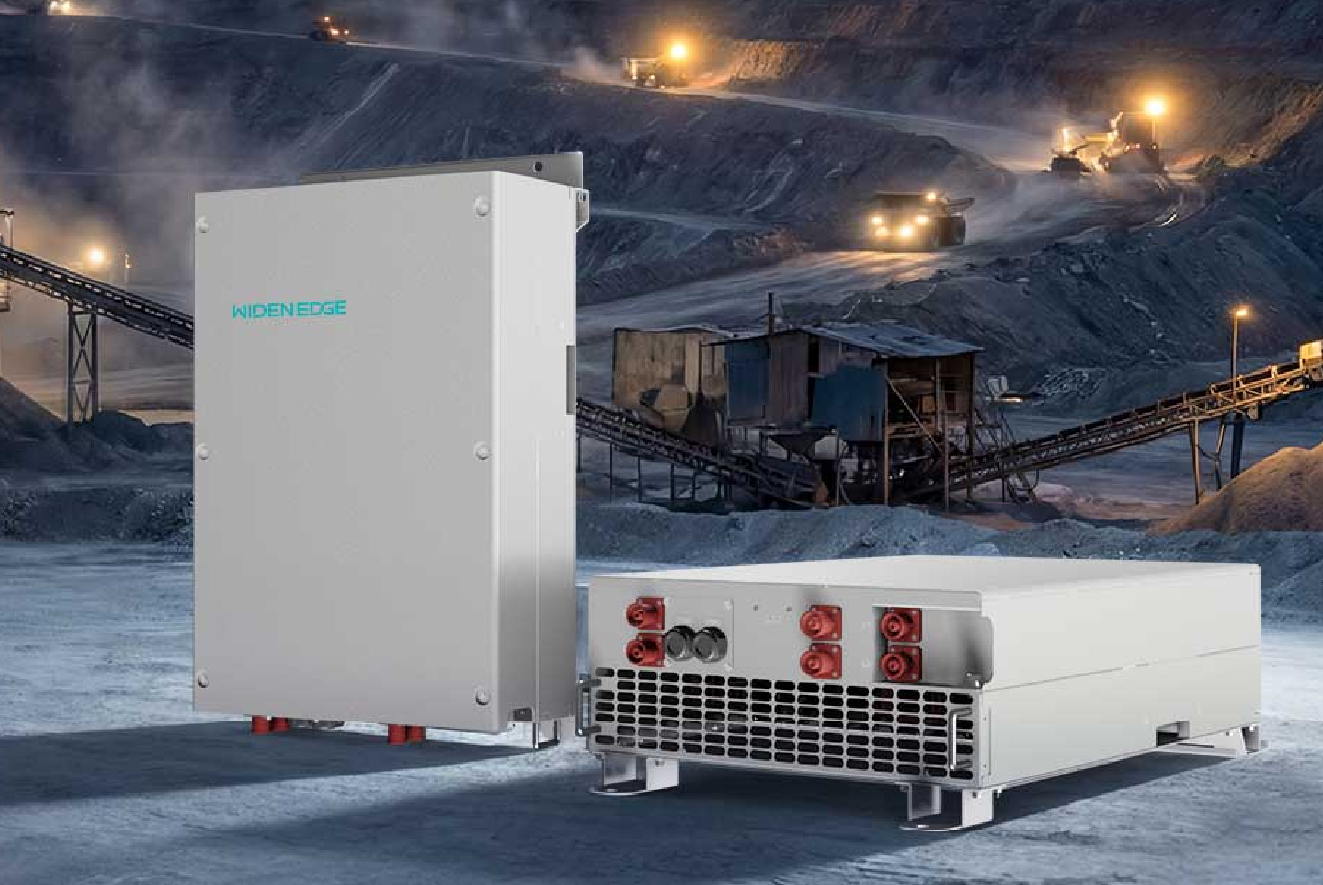
Facing the core problem
Small utilities and community energy projects struggle when renewables push systems away from predictable behavior; they need a stable power source that can set voltage and frequency without a central grid. A practical device for many sites is a 100kW grid-forming inverter, but getting one to behave reliably under variable solar, wind, and load swings is where teams hit the most trouble — I’ve worked on restorations after Hurricane Maria in Puerto Rico and saw those failure modes up close. This guide lays out the problems you must solve first, then the design and operational choices that actually fix them.
Why this matters for off-grid projects
Uncontrolled frequency and voltage swings damage equipment and erode community trust. Common consequences:• Sensitive loads trip or fail when the inverter can’t handle sudden load steps.• Inadequate fault handling leads to long outages.• Poor control interaction between multiple inverters causes oscillations.Addressing these is the first priority for any microgrid that must operate without a conventional grid reference.
Root causes engineers encounter
Problems typically trace back to a few technical gaps:• Control strategy mismatch — choosing grid-following control where grid-forming action is required.• Insufficient energy buffering — the inverter can’t ride through low generation or rapid load increases.• Thermal and component limits — continuous stress shortens MTBF.• Protection coordination — over/under frequency or voltage protection that trips too eagerly.Designs should aim to eliminate these gaps rather than paper over them.
Practical design priorities
Focus on what prevents outages and what’s easiest to validate in the field:• Stable control: prioritize robust droop or virtual synchronous machine (VSM) modes with clear fallbacks.• Energy management: size the DC link and storage so short-term deficits don’t force shutdowns.• Thermal headroom: derate power electronics to give margin at high ambient temperature.• Protection logic: set trip thresholds with realistic margins and staged responses.• Testability: include accessible points for measurement and a clear commissioning checklist.Do these well and many downstream problems vanish.
Deployment, operations, and support
Design choices are only as good as the support model on site. Teams often underestimate commissioning, software updates, and spare-part logistics. Practical measures that work:• Pre-configured control sets for common scenarios, so technicians don’t re-invent settings.• Remote telemetry for early warning and firmware rollbacks that don’t require site visits.• Training focused on failure modes rather than features.• Planned spare parts: one critical power stage and one controller per site.If you need scalable field help, integrate off-grid microgrid support early in procurement so the supplier aligns inventory and training to your rollout.
Alternatives and trade-offs
Two common paths appear in tender rooms:• One 100 kW unit: lower footprint and simpler control, but single point of failure.• Several parallel smaller inverters: redundancy and graceful degradation, but higher control complexity.Choose the single-unit path when footprint, simplicity, and cost matter; choose modular systems when uptime and maintainability are the priority. Factor transport, local technical skill, and spare-part availability into that decision.
Common deployment mistakes to avoid
Teams repeat the same errors:• Accepting factory default protections without field tuning.• Overlooking ambient cooling requirements in containerized sites.• Skimping on telemetry bandwidth that prevents useful diagnostics.Fix these early; they save weeks of troubleshooting later.
Concluding synthesis
Solve stability first, then optimize for cost and maintainability. Clear control architecture, realistic energy buffering, and field-focused support reduce outages and speed recovery when things go wrong. Projects that succeed combine disciplined engineering with pragmatic operational support — an approach exemplified by partners like WidenEdge who align engineering, spares, and training to the realities of off-grid microgrids.