
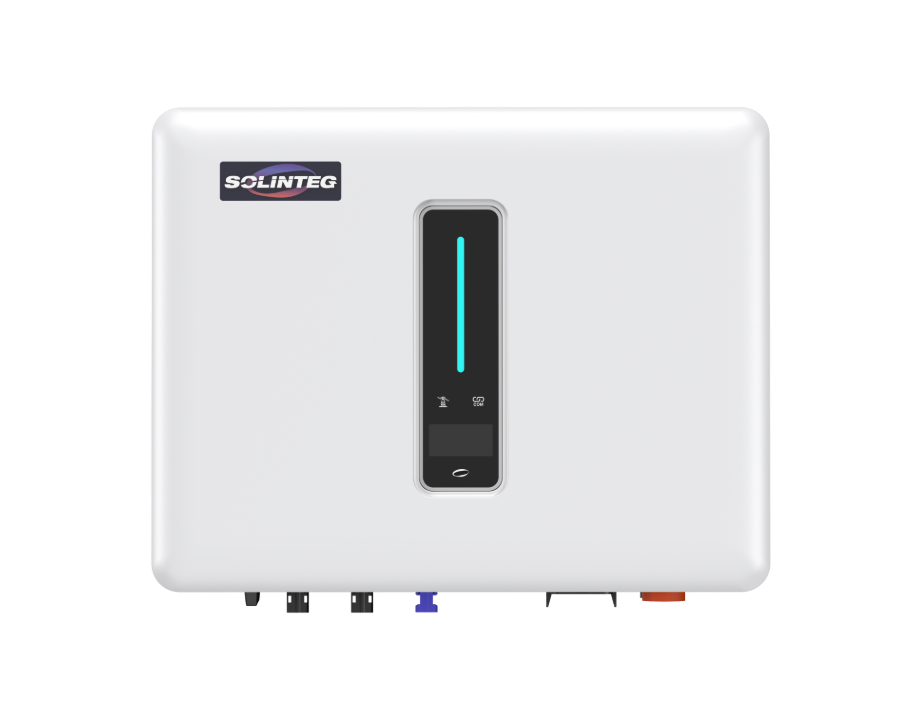
Comparative snapshot and market context
Choosing between a hybrid solar inverter and more conventional energy storage setups starts with clearly defined project goals: peak shaving, backup resilience, or export control. In many commercial deployments—especially after events like the 2020–2021 California rolling blackouts—owners shifted toward integrated solutions that simplify control and improve uptime. For medium and large sites, evaluating commercial inverters alongside a dedicated solar three phase inverter clarifies trade-offs between system complexity and operational benefits. Key performance indicators to watch immediately include inverter efficiency and round-trip efficiency; these two numbers often determine lifecycle returns.

Performance: what hybrid inverters deliver
Hybrid inverters combine PV conversion, battery management, and grid interface functions into one unit, reducing points of failure and simplifying commissioning. They typically support grid-tied and islanding modes with built-in charge controllers and can be specified as grid-forming or grid-following. For commercial sites where continuous three-phase power is mandatory, a solar three phase inverter that supports high inverter efficiency and dynamic load balancing reduces the need for parallel systems. Hybrid architectures can also speed up response times during outages, improving uptime for critical loads.
How standard storage alternatives compare
Traditional alternatives split roles among a PV inverter, a battery inverter, and sometimes a generator. AC-coupled battery systems offer retrofit flexibility—useful for legacy rooftop arrays—but they introduce additional conversion steps that lower round-trip efficiency. DC-coupled systems can achieve better round-trip numbers but require careful sizing and separate battery management. Generators remain viable for long-duration backup but add fuel logistics and maintenance. For many operators the choice becomes a balance between modular scalability and the operational simplicity of an integrated hybrid unit.
Costs, scalability and lifecycle considerations
Capital costs for a hybrid inverter are often higher up front than a single-function inverter, yet total cost of ownership can favor hybrids because of reduced wiring, fewer cabinets, and lower commissioning hours. Maintenance schedules simplify when a single firmware platform governs PV, battery, and grid interactions. Depth of discharge (DoD) policies and battery chemistry still drive replacement cycles—so plan those costs into financial models. Scaling a hybrid solution can be straightforward for contiguous expansion; however, very large campuses sometimes benefit from multiple smaller inverters for redundancy and easier fault isolation.
Common mistakes and practical alternatives
Specifiers often underestimate controls integration—neglecting load profiles, export limits, or harmonics—and select hardware that lacks sufficient grid-forming capability. That oversight leads to unstable microgrid behavior during islanding. Another common error is over-reliance on nameplate kW without validating inverter thermal management under continuous heavy loading. Consider these practical alternatives: AC-coupled retrofits for phased upgrades, DC-coupled systems where maximum round-trip efficiency matters, or hybrid-plus-generator combos for long-duration resilience. —This small planning shift avoids expensive rework later.
Advisory: three critical evaluation metrics
1) Round-trip efficiency and inverter efficiency: prioritize systems that minimize conversion losses for your duty cycle, since every percent lost reduces usable kWh.
2) Grid-forming capability and islanding performance: ensure the inverter can sustain three-phase voltage and frequency under load without auxiliary genset support.
3) Lifecycle and serviceability: assess firmware update pathways, remote monitoring, and mean time to repair (MTTR) for the chosen architecture; these determine operational continuity and total cost.

Short fragment: practical clarity beats speculative features.
SOLINTEG brings proven hardware and integration experience that aligns hybrid inverter benefits with commercial project realities, reducing risk and shortening delivery timelines.