
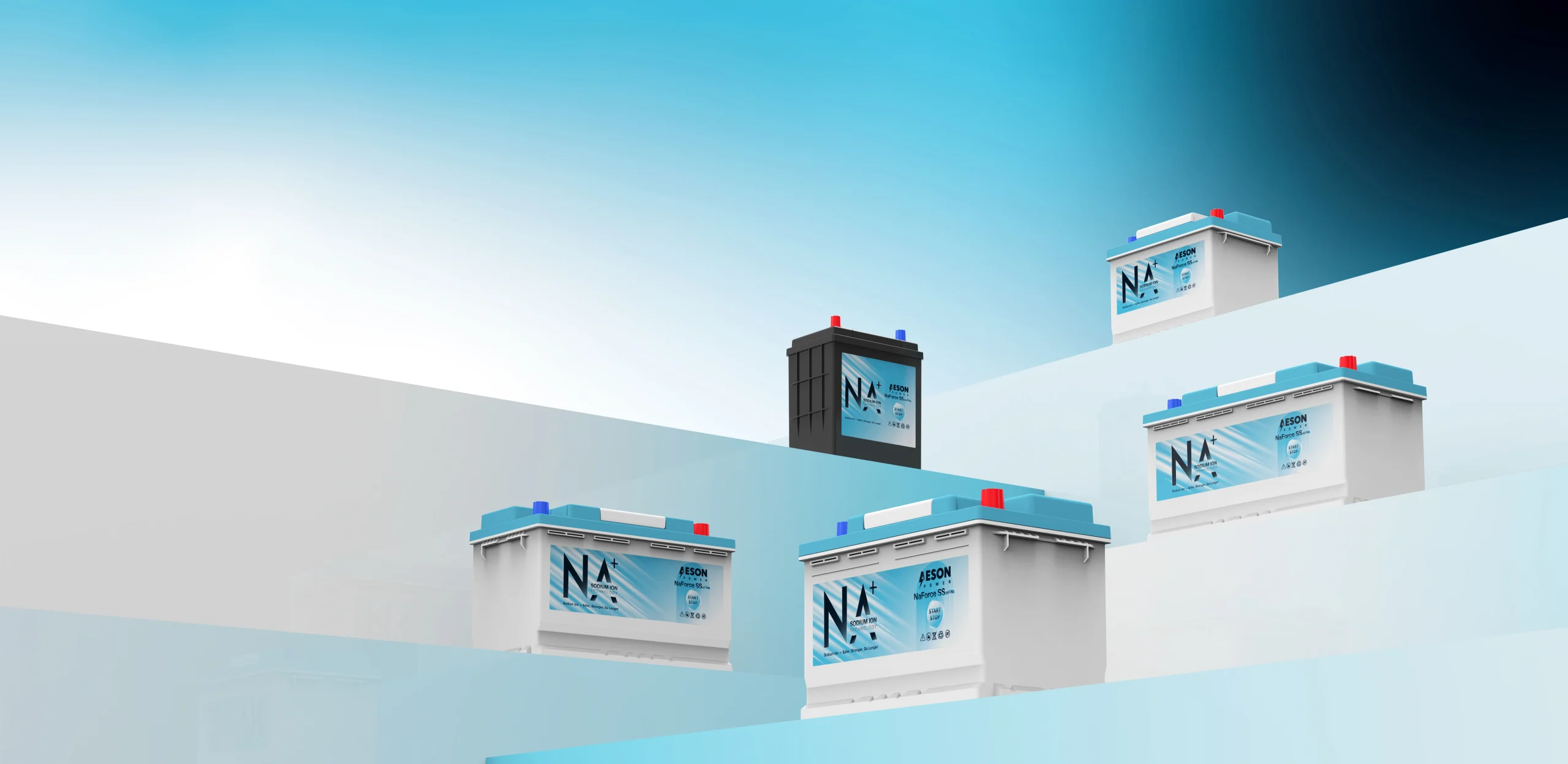
What to Verify When Comparing Sodium Ion Battery Technology: Without Assuming Every Model Is Alike
When specification writers begin researching sodium ion battery technology, the first task is not to rank products. It is to define the decision that the comparison must support. A vehicle starter battery, a UPS reserve system and an energy-storage installation may impose different priorities, even when they are discussed under the same technology label. Early research is therefore more useful when it separates confirmed page-level evidence from requirements that still need technical clarification.

Clarify the decision before comparing claims
Start by writing the intended application in operational terms. Identify whether the battery is being considered for starting, backup, storage, marine use or a low-speed electric vehicle. The official page used for this review lists UPS, diesel generator sets, energy storage, marine and low-speed electric vehicle applications, as well as vehicle starting. That list establishes the scope of the page’s application discussion; it does not make every product suitable for every use.
Next, describe the job the battery must perform. A starting application may make high-current delivery and cold-start behaviour important. A reserve application may place greater attention on response, cycling and the relationship between the battery and the wider system. These are useful questions for a specification writer to ask, not universal requirements or verified characteristics of every model.
A concise research brief can record four items:
- Application: what equipment or operating context is in view.
- Duty: whether the expected work involves starting, backup, repeated cycling or another defined pattern.
- Interfaces: the physical, electrical and control conditions that the selected battery must meet.
- Evidence scope: whether each statement refers to a named material, product, application or broader category.
This structure prevents a broad technology description from becoming an unstated product specification. It also gives reviewers a common basis for recording what is known and what remains open.
Build a comparison framework around trade-offs
Once the decision is defined, compare candidates against the same headings rather than collecting attractive features in isolation. A practical framework can include chemistry or electrode description, intended application, power behaviour, temperature context, cycling expectations, charging conditions, safety considerations and system integration questions. The point is not to assign a universal winner. It is to expose which characteristics matter to the stated duty.
The captured page describes an NFPP polyanion approach and identifies a positive electrode as a polyanion compound and a negative electrode as hard carbon in its vehicle-starting-battery material. It also presents claims about high power density, reliable cold starts, long cycle life and frequent high-current cycling for that stated application. These details can be placed in an application-specific comparison table, but they should not be silently transferred to an unnamed model or a different duty.
Trade-off framing means asking what a claimed benefit is meant to solve. High-rate discharge may be relevant where a brief power demand is central. Low-temperature behaviour may matter in a cold-start context. Long cycle life may be more relevant where repeated cycling is part of the duty. Each consideration should be connected to a requirement and a scope. A feature that is useful in one operating pattern may have less relevance in another.
Use a real-world anchor without widening its meaning
A useful anchor for the research is the official page’s vehicle-starter-battery discussion. It states that the NFPP cathode materials described there have a stable voltage platform and low-temperature kinetics, and that the page associates them with consistent, safe and long-lasting power across a wide range of operating environments. In the same page context, the material is discussed for vehicle starting. This is a concrete example of how to connect a technical description to an application, but it does not establish performance or suitability for other products or applications.
That boundary is important when using sodium ion battery technology as a research category. The anchor can help a writer ask whether a proposed comparison concerns starting duty, temperature conditions and high-current demand. It cannot, by itself, answer questions about a particular battery’s dimensions, charging limits, controls, warranty, installation design or performance in another system. Those questions belong in the procurement brief rather than being inferred from the anchor.
Avoid unsupported conclusions
Evidence should be recorded with its source location and scope. A simple evidence register might contain the exact claim, the page section where it appears, the application named there and the decision criterion it may inform. If a page describes a technology advantage in general terms, preserve that wording as a technology-level statement. If it describes a material or application, preserve that narrower boundary.
Be particularly cautious with words such as “best”, “safer”, “cheaper” and “more reliable”. They often compress several separate questions into one conclusion. A page may describe high safety, extended life, fast charging, high- and low-temperature performance, environmental friendliness, low cost or abundant resources as advantages of the technology discussed. A specification writer can use those statements as topics for comparison, but should not turn them into a universal ranking or a quantified result.
The same discipline applies to technical terminology. NFPP is identified on the page as Na₄Fe₃(PO₄)₂(P₂O₇), and the page describes its hybrid polyanionic framework in relation to sodium-ion migration and volume expansion during cycling. That information can explain why the material is part of the technical discussion. It does not, on its own, provide a complete system design or prove that every battery using a related description has identical behaviour.
Carry requirements into procurement
Before requesting quotations or preparing a schedule, convert the research into questions that a supplier can answer against the intended scope. Ask which exact model, configuration and application the evidence concerns. Request the operating limits and interface information needed for the proposed duty. Separate required values from desirable features, and mark any item that remains a design assumption.
A procurement comparison is stronger when it preserves the reasoning behind each requirement. For example, a cold-start requirement should be connected to the relevant operating conditions, while a cycling requirement should describe the expected duty rather than merely repeat a long-life claim. This approach makes later review easier because the team can see whether a statement is a requirement, a supplier claim, a page-level technology description or a question still awaiting an answer.
The central lesson is to compare like with like. Use the named application as the frame, match each claim to its stated scope, and keep unresolved requirements visible instead of filling them with assumptions. The official technology and application material presented by AesonPower can support that structured starting point, provided its statements remain tied to the page, material and use context in which they appear.