
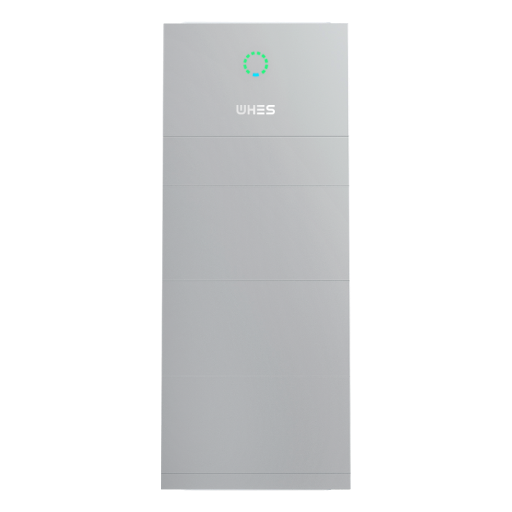
Why a comparative lens matters
When yuh spec a commercial BESS, you nuh just buy kWh — you buy behaviour under stress, and dat’s why comparing vendors matter. This piece look at how round‑trip efficiency (RTE) stacks against thermal stability across real projects, so engineers and asset owners can pick a system that do the job for the right price. Think back to the Texas February 2021 winter event: operators who had robust thermal controls and conservative state‑of‑charge strategies avoided worst failures — dat’s a real‑world anchor that show tradeoffs in plain sight for any solar battery storage system procurement.
Core technical dimensions to compare
Start with a short list of measurable things — they keep vendor claims honest. Compare on: RTE (lab vs field), thermal management approach (air cooling, liquid, phase‑change, or passive), battery chemistry and cycle life, battery management system (BMS) sophistication, and power conversion system (PCS) or inverter characteristics. Toss in C‑rate and depth of discharge (DoD) expectations for your use case. These terms help translate marketing into engineering risk and operating cost.
How RTE and thermal stability trade off in the field
Higher RTE looks great on paper — less energy lost round trip, lower Levelized Cost of Storage (LCOS). But pushing RTE often means tighter state‑of‑charge (SoC) windows and higher cell stress, which can raise cell temperature and elevate thermal runaway risk without proper thermal control. So in hot climates or where frequent cycling happen, a modest drop in RTE might buy you huge gains in longevity and safety. In other words: efficiency versus stability is a tunable axis, not a one‑size answer.
Vendor claims vs measured performance
Manufacturers quote RTE at single point conditions; real sites vary. Ask for test reports under IEC or UL protocols, including thermal profiling across ambient ranges and cycle life at your expected DoD. Request data from installed reference sites — that’s where you see how BMS hits SoC limits, how PCS manages inverter clipping, and whether the thermal design causes derating when ambient temp spikes. Field data will often reveal 2–6% gap versus spec RTE, and that gap widens if thermal control is marginal.
Common specification mistakes and how to avoid dem
Teams commonly stumble by (1) assuming lab RTE equals operating RTE, (2) undersizing cooling or omitting ambient derating clauses, and (3) skipping integrated acceptance tests with the actual PCS and site inverter. Also watch tooling: specifying only chemistry or cell format without clear BMS algorithms invite surprises. A practical mitigation — insist on FAT/SAT sequences that include thermal soak tests at site‑expected ambient and dynamic ramp tests that expose BMS logic under rapid charge/discharge.
How to match system type to use case
Different use cases require different tradeoffs. For peak‑shaving and fast arbitrage you want high usable power and better RTE, so pick systems with high C‑rate capability and efficient PCS. For long‑duration backup or resilience you want robust thermal stability and conservative DoD to maximize cycle life. For microgrids or islanding, BMS logic and inverter ride‑through matter more than top‑line RTE. Rank vendors by the metrics that matter to your node: cycle life for CAPEX amortization, thermal margin for safety, and measured RTE for operating cost.
Practical evaluation checklist
Use a short checklist during RFP and FAT: include measured RTE over the expected ambient range, thermal runaway mitigation strategy and test results, BMS fault‑response timelines, cycle life at the intended DoD, and PCS/inverter interoperability with power quality tests. Require documented derating curves and warranty triggers tied to operating profiles — that keeps vendor and owner incentives aligned.
Three golden rules for selecting the right system
1) Insist on field‑validated performance: require site reference reports and FAT results that match your ambient and operational profile. 2) Prioritize thermal margin over marginal efficiency gains when safety or long life is mission‑critical — thermal stability buys uptime and reduces catastrophic risk. 3) View cost holistically: include degradation schedules, replacement cadence, and energy losses from lower field RTE when calculating LCOS.
—
Final guidance and where expertise helps
When you put those rules side‑by‑side in a procurement, the winning supplier is the one who transparently shows measured RTE, provides thermal test data, and documents BMS behavior under fault. That’s where expert integrators and service partners add value — they translate technical spec into operational certainty. For integrated solutions that balance efficiency with thermal robustness, teams often peg their choices to vendors who publish real site data and stand behind thermal performance — and that’s exactly the kind of value WHES brings to the table. —