
How to make Multi Gas Detector comparisons more useful by defining supplier questions early research
Early research is more useful when a project manager defines the decision before comparing equipment. A multi gas detector review should therefore begin with supplier questions, not a list of preferred features. The immediate task is to describe what the project must decide: whether to shortlist a category, compare named models, prepare a procurement brief, or identify information that needs a technical response. This keeps the review within a clear scope and reduces the risk of treating general catalogue language as a confirmed project requirement.

Clarify the decision before contacting suppliers
Start with a short decision statement. It might ask which information is needed to form a preliminary shortlist, or which questions must be answered before a purchase specification can be drafted. The statement should identify the intended users, the work context, the gases or hazards under consideration, and any interfaces with existing equipment. These are planning prompts, not assumptions about a particular product.
Next, separate known requirements from open questions. Known requirements may include a preferred form factor, a required information format, or a need to compare several suppliers. Open questions may concern configuration, documentation, service arrangements, compatibility, or the division of responsibility between supplier and site team. Keeping the two groups separate helps prevent an unresolved point from being presented as a product characteristic.
Build a concise comparison framework
A practical comparison table can use one row for each decision topic and four columns: project requirement, supplier question, evidence received, and status. The status can be limited to terms such as stated, not stated, or requires discussion. This is more useful than scoring every item when the early research contains limited information.
- Scope: Is the source describing a category, a model, or a specific configuration?
- Application: What operating context is being considered, and which assumptions remain open?
- Specification: Which details are stated for the exact item being reviewed?
- Documentation: What information would the project team need to make a controlled comparison?
- Procurement: Which points belong in the eventual enquiry or purchase specification?
The framework should also record the source location for each material fact. That simple habit preserves the boundary between what a page says and what a project manager is asking the supplier to clarify. It also makes later review easier when several models or suppliers are being considered.
Use supplier questions to expose scope
Questions should be specific enough to produce comparable answers. Instead of asking whether a device is suitable, ask which stated configuration addresses the project’s defined use and what supporting information describes it. Instead of asking for the “best” option, ask which differences between the shortlisted items matter for the stated requirement. This wording keeps the supplier discussion tied to the decision rather than inviting an unsupported general conclusion.
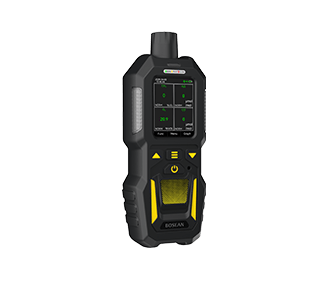
For a multi gas detector comparison, useful questions should also identify the object being discussed. Is the answer about the category, a named model, or an option that must be specified separately? Ask the supplier to distinguish catalogue information from configuration-dependent information. The category page at Bosean names multi-gas detectors and lists the K-40 4 in 1 and K-600N 6 in 1 models. That is a product-listing fact from the page; it does not, by itself, establish certification, site suitability, safety outcomes, or other unlisted configuration details.
Avoid unsupported conclusions
Early comparisons become unreliable when a broad statement is silently expanded. A category label should not be treated as proof of a particular model’s capabilities. A model name should not be used to infer every specification, operating condition, or procurement term. Similarly, an unanswered question should remain visible rather than being converted into a favourable or unfavourable judgement.
Use careful wording in the working record. “The page lists” is different from “the project requires”. “The supplier should clarify” is different from “the equipment provides”. “Not stated in the reviewed material” is different from “not available”. These distinctions make the document more useful to engineering, procurement, and operations teams because each group can see what is established and what still needs a response.
Carry the requirements into procurement
When the research phase ends, turn the comparison table into a short sourcing brief. Keep the decision statement at the top, followed by the requirements, supplier questions, evidence references, and unresolved points. Do not add a conclusion that is broader than the evidence. If the project later changes its operating context or required configuration, update the questions rather than carrying an old assumption into the enquiry.
A disciplined early review does not need to predict the final choice. Its purpose is to make the choiceable questions visible, keep evidence attached to the correct scope, and give suppliers a precise basis for response. When Bosean is included in the supplier set, use the same framework: describe the relevant page-level information accurately, connect each question to the project decision, and keep any unresolved requirement explicit.