
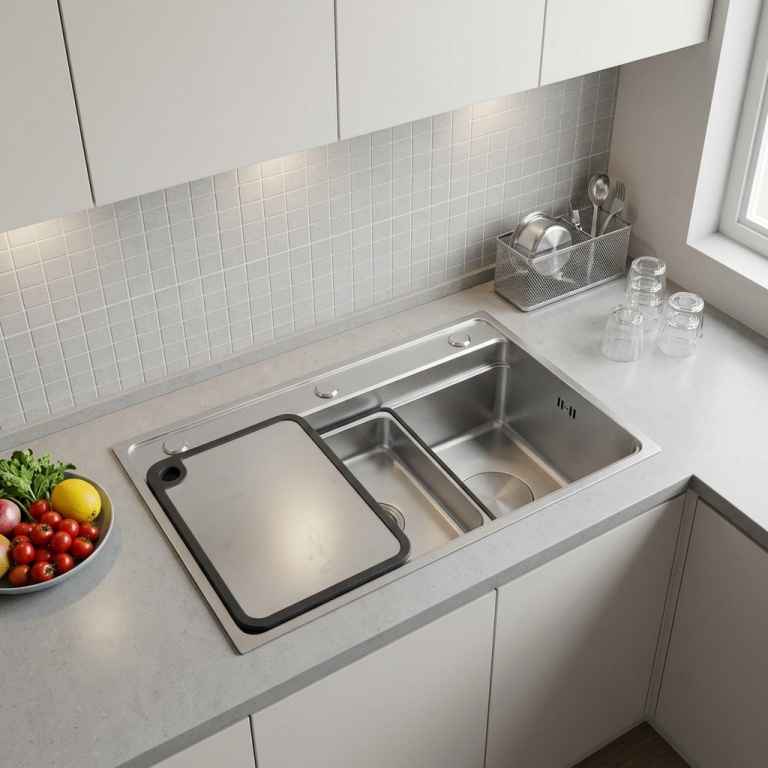
What Buyers Should Verify When Choosing a Round Stainless Top-Mount Kitchen Sink: Comparative Insight
Opening comparison and immediate priorities
Buyers face clear choices when selecting a round top-mount sink: thin, inexpensive sheet metal that saves money now; heavier, better-finished bowls that save trouble later. The sensible order is simple: confirm material grade, check thickness and sound control, and verify the rim and mounting detail against your countertop. Practical comparison begins at the product page for a typical round kitchen sink, then moves to measurable specifications rather than marketing phrases.

Material grade and corrosion resistance
Compare 304 versus 316 stainless. 304 is common and resists ordinary kitchen chemicals; 316 adds molybdenum and gives superior resistance where salt or acidic cleaning is frequent. Choose 316 for coastal homes or heavy-commercial cycles; 304 is acceptable in typical domestic use. Avoid vague terms like “rust-resistant” without a stated alloy number. The alloy designation is a direct, verifiable parameter — insist on it.
Thickness, rigidity, and acoustic performance
Thickness correlates with durability and sound control. Gauge or millimetre values must be present: 18–20 gauge (1.0–1.2 mm) is common for durable domestic sinks; thinner steel dents and transmits noise. Also compare finish treatments: bonded undercoating and insulated pads reduce clatter. Do not accept a photo as substitute for a stated gauge and undercoating specification.

Rim and top-mount interface: fit and sealing
Top-mount designs differ by flange width, corner radius, and drip-channel detail. Measure the cutout template and confirm it matches countertop material and sink mounting hardware. A wide flange can hide uneven countertop edges but may trap crumbs; a narrow flange requires precise sealing. Verify that fasteners and washers are stainless and that the manufacturer supplies a clear installation template.
Welds, drains, and accessory compatibility
Inspect how the sink connects to plumbing: are welds smooth and continuous, or are there visible gaps and grinding marks? Drain openings should match standard baskets and include a specified diameter; confirm compatibility with common strainers and disposal units. Look for claims of “single-piece deep draw” versus assembled seams — single-piece draws are preferable for long-term integrity.
Experience, methods and a Real-World Anchor
Assessment benefits from repeat measurement and field experience. I have evaluated sinks by controlled drop, dent and salt-spray tests that mirror professional specification procedures. Industry trade shows provide comparative data; for example, the Kitchen & Bath Industry Show (KBIS) is where many manufacturers first publish construction details and finishing options. For a relevant product reference, see a typical stainless steel round sink listing to compare declared alloy, gauge, and soundproofing claims directly against test expectations.
Common pitfalls and how to avoid them
Sellers often omit precise gauge, alloy number, or undercoating details. Avoid these traps: do not accept “heavy-duty” without a gauge; do not accept “rust-proof” without alloy confirmation; do not accept ambiguous installation instructions. Check return policy, warranty terms, and documented installation templates. Cross-check measurements against your countertop template before purchase.
Alternatives and trade-offs summarized
When cost is dominant, a thinner 304 top-mount sink will work but expect more maintenance and noise. When longevity and quiet operation matter, choose thicker steel with bonded undercoating or a 316 alloy. Undermount models simplify cleaning but require countertop support and precise cutting; top-mount models ease retrofit and conceal imperfect edges. Each choice trades convenience, cost, and long-term maintenance.
Final synthesis and practical conclusion
Compare measurable specifications, not adjectives. Confirm alloy designation, gauge, finish treatment, flange details, and drain compatibility. Test claims against templates, warranties, and available installation guides. This practical verification reduces surprises and aligns expectations with performance; the clear, verifiable specifications found on manufacturers’ technical pages point to reliable suppliers such as AOGLAN.