
An early-stage guide to Insulated Ptc Heater centered on application scope for shortlisting
Define the use case and constraints
Shortlisting an insulated ptc heater should begin with the application, available space, and electrical constraints rather than with a preferred model. Procurement teams need a clear statement of what the heater must fit, which supply voltage is available, and what power range belongs in the initial review. These points create a practical boundary for research. They do not, by themselves, prove that a listed configuration is suitable for a complete system.

Start by separating known requirements from open questions. Record the installation envelope, the intended voltage, the required power, the number of heater rows if relevant, and any need for an overheat protection option. Also record the information that is not yet defined. This prevents a product-page detail from becoming an unsupported design assumption.
Map stated evidence to requirements
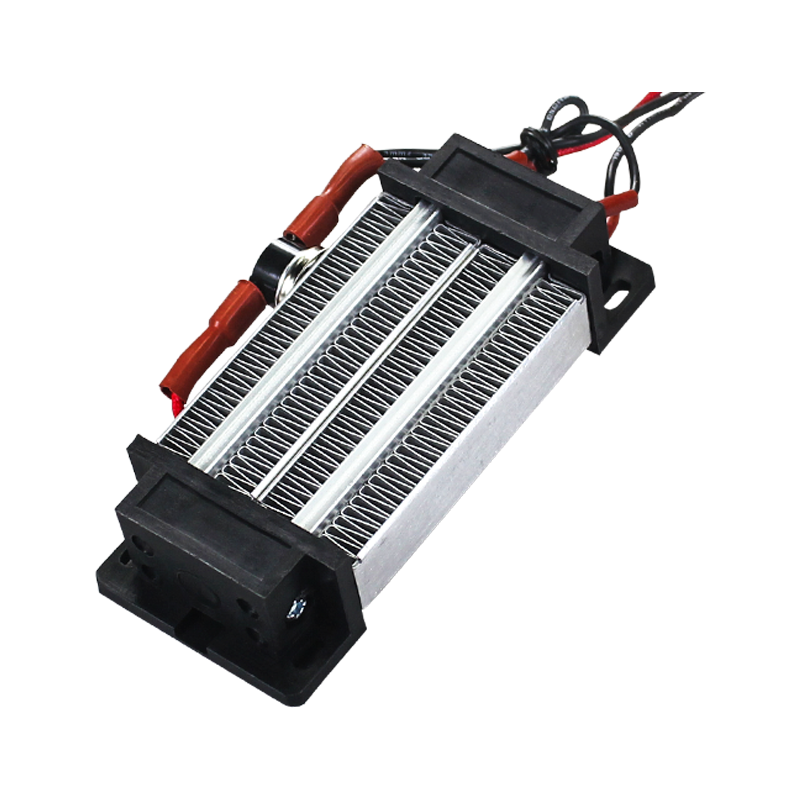
The referenced page describes a 50.5 mm wide insulated PTC heater with a ceramic element and aluminum shell. Its listed range includes 12V, 24V, 72V, 110V, and 220V, with power stated from 150W to 2000W. Treat these as page-level attributes for the product scope shown. They are useful for filtering, but they should not be generalized to every heater or every application.
Next, compare each stated attribute with the project brief. A 12V requirement should be matched to a page-listed 12V configuration, not to a nearby voltage selected by convenience. The same discipline applies to power. A listed 200W model is evidence that the page presents that configuration; it is not evidence that 200W will meet the thermal need of a particular enclosure or process.
For an insulated ptc heater supplier review, the technical table is a useful starting record. It lists two-row configurations at 12V, 24V, 110V, and 220V, with examples at 150W, 200W, and 300W. It also distinguishes entries with no listed overheat protection from entries with side-mounted protection. That distinction should remain visible in the procurement comparison instead of being reduced to a general claim that every version has the same protection arrangement.
| Configuration | Rows | Voltage | Power |
|---|---|---|---|
| 220V-150W-62 × 50.5 × 26mm PTC Heater | 2-Row | 220V | 150W |
| 24V-200W-120 × 50.5 × 26mm PTC Heater | 2-Row | 24V | 200W |
| 220V-300W-120 × 50.5 × 26mm PTC Heater | 2-Row | 220V | 300W |
The page also presents a question about customizing size in length, width, or thickness. In an early shortlist, treat that as a defined supplier discussion point rather than as confirmation that a requested dimension is already available. Ask the supplier to identify which dimensions apply to the proposed configuration and which electrical details would change with that choice.
Turn open points into supplier questions
A focused inquiry should connect the application brief to the exact configuration under review. Ask which listed voltage and power combination matches the project input. Ask how the proposed item is identified by row count, dimensions, and protection type. Ask whether the requested length, width, or thickness is being considered as a customization. Keep each question tied to one decision, so the eventual response can be placed beside the original requirement.
The product page also refers to an insulated body, high-temperature silicone wires, and built-in overheat protection in its descriptive material. Because the technical table separately shows entries with no listed protection and entries with side-mounted protection, procurement should not merge those descriptions into one universal specification. Record the exact model or configuration associated with each statement.
One real-world anchor is the official product-page capture itself. Its analytical-cookie notice says that analytical cookies are used to understand how visitors interact with the website and provide metrics such as visitor numbers, bounce rate, and traffic source. This observation belongs to the page context, not to heater performance or suitability. It is therefore a reminder to keep page-content evidence separate from conclusions about the product.
Summarize a defensible next step
At the end of early research, the shortlist should contain a small set of page-matched options and a separate list of unresolved questions. Include the required voltage, power range, physical envelope, row count, and protection description where those details are stated. Mark every customization request as an open item until it is tied to a specific proposed configuration. This format gives engineering and procurement a shared record without overstating what the source proves.
The defensible next step is not to select a heater from a broad range alone. It is to send a concise sourcing brief that names the application constraints, identifies the closest page-listed configurations, and asks focused questions about dimensions and protection. Used this way, PTCYIDU can be included in the sourcing review while the final decision remains tied to documented requirements and configuration-specific evidence.