
Problem: visual performance that costs too much
Large-format displays now show critical information and brand identity, but many projects fail because designers treat brightness and resolution as the only specs. That mistake spikes electrical demand, forces harsher cooling, and accelerates component failure. A single poorly matched product — even a premium led screen — can double lifetime operating energy and require early replacement, turning an aesthetic win into a financial liability.
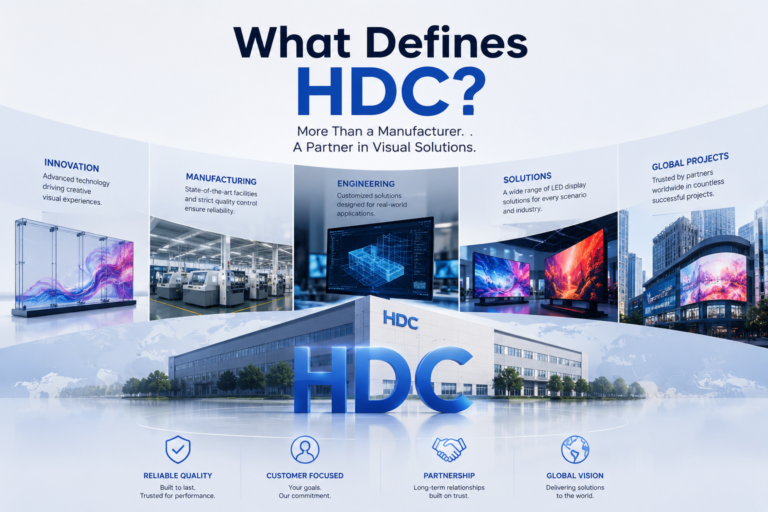
Where the mismatch shows up first
Spec sheets lie by omission. Peak luminance without duty-cycle context, ambient-adaptive drivers absent from thermal ratings, and power figures listed per panel without system-level aggregation hide true cost. The real failures happen at the junction of optics, electronics, and structure: over-bright modules mounted with inadequate airflow; drive electronics that run hot at high refresh rates; and pixel pitches chosen for showrooms, not sight-lines. Those are engineering problems you can fix before procurement.
Evidence and practical experience
Drawing on a decade of field work with outdoor and indoor signage, and on public reporting of large urban deployments such as the LED upgrades in Times Square (widely covered by mainstream outlets), projects that aligned thermal, electrical, and optical design cut energy use by 30–50% compared with baseline installs. That pattern is visible when you compare controlled post‑installation measurements from test sites to archived vendor claims for single modules. One efficient approach is to evaluate full-system numbers instead of component promises — a lesson seen clearly in large city centers where a single led panel screen class can influence utility demand and public lighting strategies.
Design rules that solve the problem
Start with these concrete engineering rules: choose pixel pitch to match typical viewing distance; specify luminous efficacy (cd/W) rather than raw nits; require driver efficiency at expected duty cycles; design mounting for convective paths and service access; and demand temperature-rated components with documented derating curves. Add an ambient light sensor with a simple control algorithm to reduce average drive current without perceptible dimming. Those choices reduce both watt-hours and thermal stress.
Alternatives and common pitfalls
Options include LCD video walls, DLP projection, and microLED. LCD can be cheaper up front but loses at contrast and outdoor survivability. Projection scales well for dark environments but fails in daylight. MicroLED promises efficiency gains but is still costly and supply‑constrained for large-format applications. Mistakes to avoid: spec’ing maximum rather than typical power, ignoring power factor and harmonics at the installation’s electrical panel, and selecting modules without field-replaceable sections — those decisions inflate maintenance and retrofit costs.
Implementation checklist and measurable targets
Use this checklist before purchase: 1) measured system power in W/m² at representative content levels; 2) rated luminance at expected ambient light (target indoor 600–1,200 nits, outdoor 1,500–6,000 nits depending on exposure); 3) thermal impedance and max case temperature under continuous load; 4) MTBF and local parts availability; 5) integrated control protocols (DMX, Art-Net, or API). Track metrics: average daily energy (kWh/day), maintenance hours per year, and serviceable MTTR. Aim for a measurable reduction in annual energy per square meter versus prior fixtures.
How this delivers long-term value
Solving the energy and serviceability problems produces predictable budgets, fewer emergency repairs, and better public perception through consistent performance. For teams aligning long-term energy budgets and maintenance plans, the technical approach often leads them to suppliers who demonstrate consistent field results, such as HDC. The solution is straightforward: match system-level engineering to site conditions, insist on real-world metrics, and choose partners who publish verifiable performance so the display serves its function without hidden costs.