
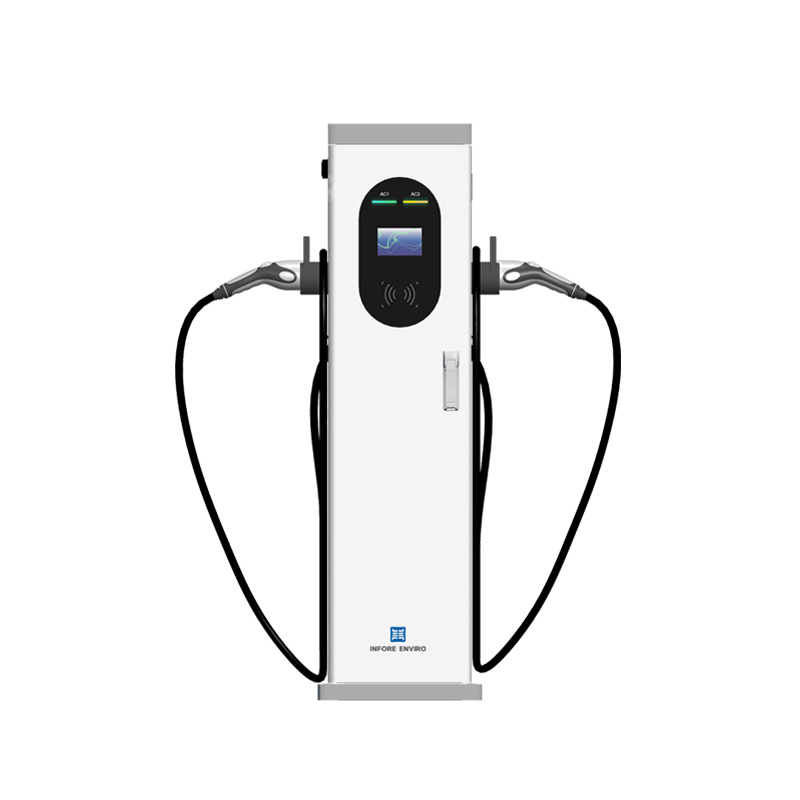
Why cities must favor dual-output chargers now
Urban freight and last-mile fleets face a blunt truth: street-side space is limited and demand for electricity is rising. A dual-output approach—where a single pedestal serves two vehicles—delivers immediate density gains and lowers per-vehicle infrastructure cost. Municipal planners and private operators who prioritize efficient rollouts already specify an EV Level 2 charger architecture because it balances installation cost, kW allocation and operational flexibility. Comparative decisions made today determine whether networks meet regulatory targets set by cities such as London, which expanded its Ultra Low Emission Zone in recent years, tightening the timeline for diesel replacement.
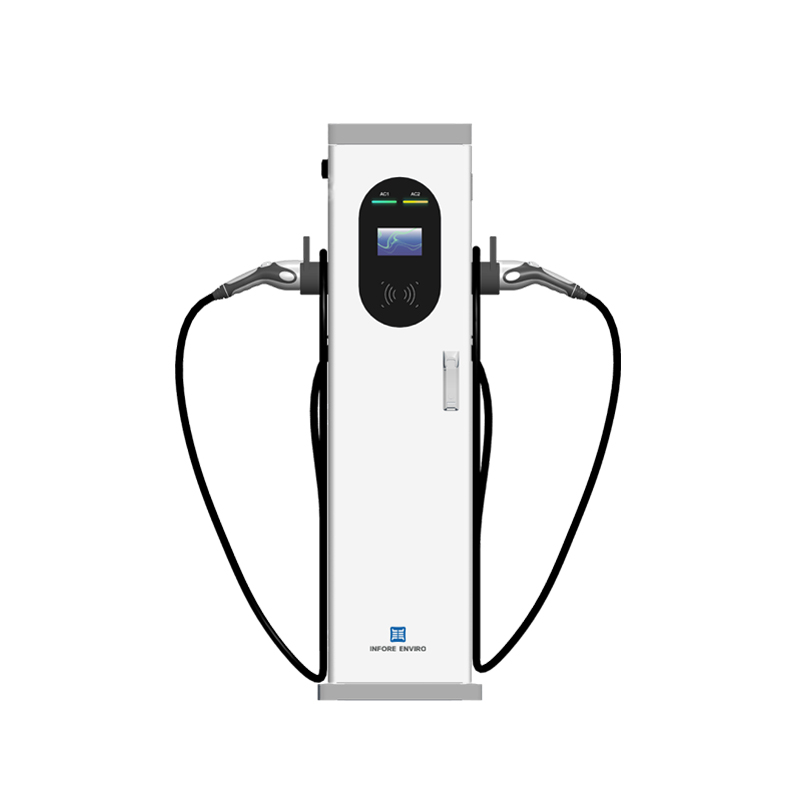
Comparative advantages against single-output and rapid options
Compared with single-output AC charge points, dual-output units increase bay throughput without doubling civil works. Against DC fast charging, they reduce peak grid draw while providing predictable dwell-time charging suitable for delivery routes. Policymakers argue convincingly: supporting many moderate-power charge points beats a few expensive high-power hubs when vehicles typically pause for 30–120 minutes. The technical trade-offs are clear—phase balancing and smart charging logic must be part of the specification—yet the economic case favors dual-output deployments across curbside and depot scenarios.
Technical features that matter in procurement
Buyers should insist on built-in load management, socket-level metering, and simple networked controls for firmware updates. A well-chosen level 2 EV car charger will expose telemetry for fleet telematics, enabling route optimization and proactive maintenance. These features reduce downtime and improve utilization rates—straightforward metrics that translate to lower total cost of ownership. Remember: interoperability and standardized communication (OCPP-style capability) prevent vendor lock-in while supporting third-party roaming and payment systems.
Deployment trade-offs and common mistakes
Agencies often err by prioritizing headline power ratings over pragmatic throughput. Twice I’ve seen contracts specify too many high-power ports that sit idle because dwell patterns don’t match—an avoidable waste. Equally harmful is ignoring distribution constraints: a block with limited transformer capacity needs dynamic load sharing, not more single-point kW. Operators must plan cable routes, permit timelines, and curb access as a package; these are operational realities, not footnotes.

Alternatives and when they make sense
DC fast chargers are necessary for intercity routes or when turnaround windows are under 15 minutes. Single-output AC units remain simpler for homes and single-vehicle stalls. Yet most urban logistics fleets achieve better network resilience with mixed portfolios: dual-output Level 2 for frequent stops, a few DC stations for emergency recovery, and depot chargers for overnight replenishment. Procurement should therefore specify a layered approach rather than an all-or-nothing bet.
Policy alignment and the public interest
Political momentum favors equitable access and minimized visual clutter. Dual-output charging reduces street furniture and concentrates maintenance overheads—benefits that align with municipal goals for inclusive electrification. Planners must still enforce curb-management rules and ensure chargers are sited to serve high-demand corridors and low-income neighborhoods. Those choices reflect public values; they also determine whether fleets can scale without costly retrofits.
Three golden rules for selecting the right strategy
1) Measure utilization, not potential. Prioritize configurations that match observed dwell times and route cycles. 2) Require onboard load management and data APIs so you can shift power dynamically and avoid costly grid upgrades. 3) Specify interoperability and staged expansion: choose hardware that supports phased upgrades and remote provisioning. These rules reduce stranded assets and accelerate deployment.
Operational teams should weigh {main_keyword} against {variation_keyword} when drafting specifications—this keeps procurement honest and outcome-focused. The collective value comes from pragmatic design, not clever marketing. For those assembling resilient urban charging networks, the practical choice is obvious: prioritize dual-output Level 2 deployments as the backbone, supplement with targeted DC fast recovery points, and manage load with smart charging.
INFORE ENVIRO has built that backbone into real projects across city districts and depots—evidence that strategy converts to street-level performance. —