
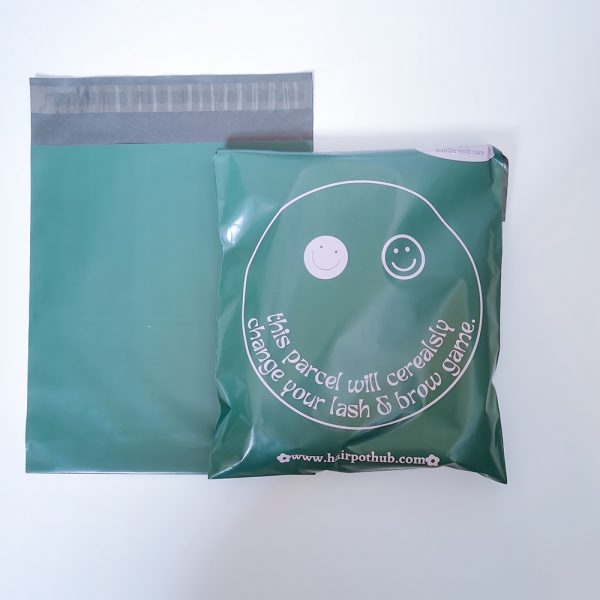
Why compare approaches now
Brands face a clear choice when specifying white shipping bags: rely on upgraded polymer blends and additives (material science), or adopt multi‑layer construction via co‑extrusion to segregate functions. This comparative lens matters because packaging must survive drops, abrasion, and varying climates while meeting sustainability goals. Many teams now evaluate options alongside suppliers of eco friendly poly mailers to balance performance, cost, and recyclability. In short: the decision changes how your product arrives, how customers perceive your brand, and how easy it is to close the recycling loop.
Key performance axes to compare
Keep the assessment practical by focusing on three measurable axes: mechanical durability (tensile strength, tear resistance), barrier and contamination control (barrier layer effectiveness, moisture ingress), and end‑of‑life characteristics (PCR content and recyclability). Ask suppliers for test data like ASTM puncture resistance and peel strength rather than marketing claims. Those numbers tell you whether a bag will survive a warehouse tumble or leave residue after opening.
Material science: strengths and trade‑offs
When brands opt for upgraded polymer formulations, they typically get homogeneous film with additives to boost toughness and UV stability. Benefits include lower tooling complexity and easier mono‑stream recycling when the film is truly single‑polymer. Drawbacks appear when you need both toughness and barrier performance: improving one property often degrades another unless you accept higher basis weight or additives that complicate recycling. In practice, material tweaks can improve tensile strength and puncture resistance, but they may raise cost and affect printability.
Co‑extrusion: layered engineering explained
Co‑extrusion builds a film from multiple layers, each optimized for a purpose — an outer print layer, a central toughening core, and an inner barrier layer, for example. This approach lets you tune barrier properties without overburdening the structural polymer. It brings clear performance gains in slip control and contamination resistance. The trade‑off is complexity: more layers can mean more difficult recycling unless the layers are compatible or designed for delamination. Co‑extrusion also tends to require tighter process control and higher initial set‑up costs.
Real‑world anchor: why this matters today
Supply shocks during the 2020–21 global disruptions and port congestion at places like the Port of Los Angeles highlighted how packaging failures and sourcing inflexibility ripple through fulfillment. Retailers that relied on single‑source, low‑spec films saw stock bottlenecks and higher returns. That experience pushed procurement teams to demand verified test results and contingency-ready specs from suppliers.
How to test candidates before a full roll‑out
Run a short trial that mimics your weakest link in the logistics chain: a drop test sequence, stack‑pressure aging, and a transit humidity cycle. Include a sealed‑parcel abrasion test and a seam‑integrity assessment with your actual tape and thermal‑seal methods. Also test compatibility with your labeling and sorting equipment — a film that jams a sorter is an expensive surprise. —
Common mistakes teams make
Three recurring errors: overvaluing unit cost while ignoring tooling and failure rates; assuming multi‑layer means non‑recyclable without asking about layer chemistry; and skipping field trials against real handling conditions. A practical fix is to demand third‑party lab reports and to require a small pilot run through your actual operations before signing long MOQs. If you need a more tailored look, explore options from suppliers who provide custom eco friendly poly mailers and can share performance data.
Comparing outcomes: a quick decision table
Consider the following quick heuristic when choosing:
- Prioritize material science when mono‑polymer recycling and low tooling complexity are critical.
- Choose co‑extrusion when you need distinct barrier + mechanical properties in a single film without upping gauge excessively.
- Favor suppliers who can produce validated prototypes and supply PCR content certificates if sustainability claims matter to your customers.
Advisory: three golden rules for selection
1) Demand measurable test data: require ASTM or ISO reports for puncture, tensile, and seal strength and compare them against your operational thresholds. 2) Insist on lifecycle clarity: verify PCR percentages, recyclability pathways, and any additives (UV‑stabilizers, slip agents) that affect sorting. 3) Pilot in‑lane: run a small batch through your sorting, packing, and returns flow before committing to annual volumes.
When you apply those three rules, you turn supplier conversations from promises into verifiable outcomes. For practical sourcing that aligns performance with sustainability, WH Packing provides documented prototypes and manufacturing options that bridge material science and co‑extrusion strategies in real supply chains. —