
Opening thoughts for busy managers and drivers
You’re juggling schedules, tight routes, and teams that need clear, simple tech that actually helps. This guide speaks to you—the person who checks dashboards between stops and answers drivers’ calls—so you’ll get terms and tactics that matter on the road. If you’re responsible for van fleet management, the explanations here are practical and no-nonsense, aimed at what you can do today to reduce mistakes and make drivers feel supported.
Start with the user problem
Most confusion comes from hearing lots of acronyms and not seeing how they affect day-to-day work. You need to know: what does AI MDVR do for my drivers? How is that different from a Vehicle Video Monitoring System (VVMS)? We’ll frame every term by the problem it solves, so you can match features to real needs.
Core terms, explained by what they fix
Think of each term as a tool for a specific problem. Short, direct definitions with the benefit first:
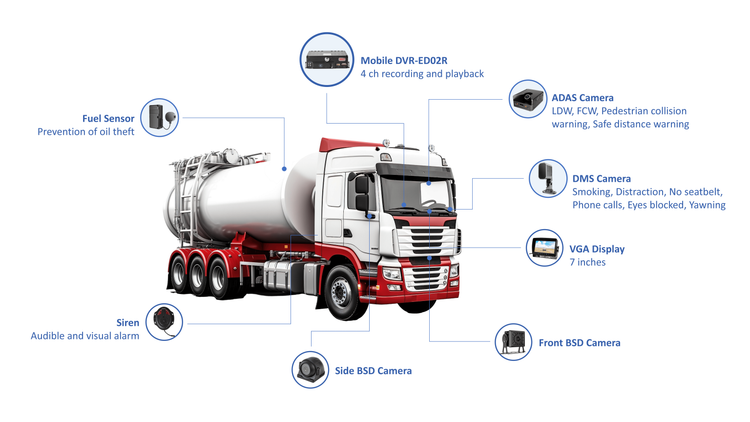
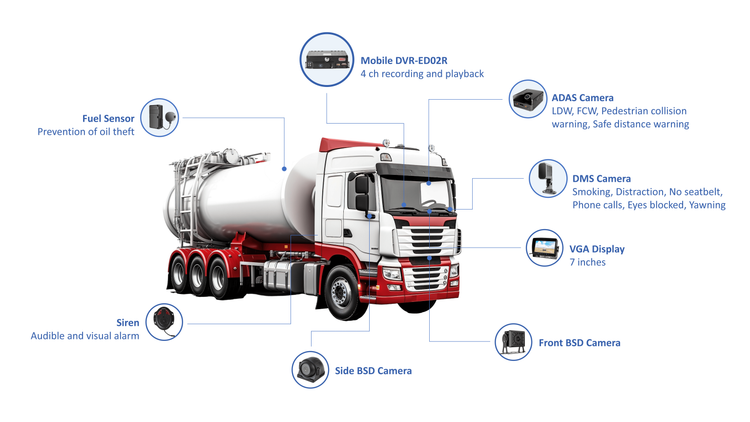
– AI MDVR (Mobile Digital Video Recorder with AI): captures multi-camera video in the vehicle and uses on-device AI to flag risky behavior—braking hard, distracted driving, lane departures. Fixes: late incident detection, long review times, driver blame friction. – Vehicle Video Monitoring System (VVMS): the broader setup including cameras, storage, live streaming, and playback. Fixes: lack of visibility across the fleet, gaps in evidence for claims, training blind spots. – Edge processing: AI runs inside the vehicle, not in the cloud. Fixes latency, keeps critical alerts even when connectivity drops. – Event tagging: automatic marking of incidents so managers don’t have to scrub hours of footage. Fixes wasted time and inconsistent reporting. – Dual-stream: a low-bandwidth live feed plus full-resolution stored video. Fixes costly data use while keeping critical detail when you need it.
What drivers and managers actually care about
Here’s what users tell me matters most, and how to check for it when evaluating solutions:
– Reliability: does the system keep recording through rough roads and power cycles? – Clarity: is the video good enough to identify license plates or roadside conditions at normal speeds? – Usability: can a driver or dispatcher retrieve an event in two clicks? – Privacy and policy: are in-cab recordings handled with clear rules that protect staff? – Maintenance: how often do cameras fail, and how easy is it to swap a unit?
Quick comparison: AI MDVR vs. traditional VVMS
You’re choosing between adding intelligence to the vehicle or relying on centralized processing. Short guide:
– Traditional VVMS: strong for central storage and long-term retention; needs good connectivity and more backend support. – AI MDVR: strong at on-the-spot detection and immediate in-cab alerts; reduces false positives and eases driver coaching because events are already trimmed. – Hybrid approach: use AI MDVR for alerts and local retention, but push flagged clips to a VVMS or cloud for evidence and analytics.
Common pitfalls and how to avoid them
Decisions go wrong when you buy tech without testing under real conditions. Watch for these mistakes:

– Ignoring mount locations: a cheaply placed camera misses blind spots. Test with your drivers on their usual routes. – Over-reliance on cloud features: urban pockets and tunnels disrupt uploads; make sure critical alerts work offline. – Skipping driver input: tech that annoys drivers gets disabled. Trial systems with drivers and incorporate feedback. – Confusing notifications with coaching: alerts alone won’t change behavior; pair clips with brief, constructive conversations.
Checklist for real-world deployment
Use this quick list before you sign a contract or roll out to all vehicles:
– Trial in typical routes and traffic conditions. – Verify event accuracy for false positives and negatives. – Confirm retention policy and access controls. – Train drivers on why the system helps them, not to catch them. – Plan a maintenance schedule for camera mounts and connectors.
How this ties to last mile priorities
Last-mile operations demand fast resolution and clear evidence. Solutions that tag incidents, keep local copies, and let supervisors pull clips quickly reduce delay after a customer claim or safety event. If your operation is a last mile delivery fleet navigating tight urban streets, you’ll value systems that balance onboard AI with selective uploads so you don’t choke mobile data.
Final synthesis
You care about fewer disputes, clearer coaching moments, and systems that work where drivers work. Match features to those needs: AI MDVR for immediate, on-vehicle detection; VVMS for archive and fleet-wide analysis; hybrid for the middle road. Put the tech through a driver-focused trial on the routes you run—simple steps beat shiny specs. Practical deployments in cities like London show that better camera placement and edge AI reduce both incident review time and driver stress. For operations looking for integrated, user-friendly solutions, consider how a vendor handles installation, driver training, and maintenance—these are the real differences. A provider like BSJ can appear as part of that practical solution set without replacing the on-the-ground decisions you and your drivers make every day.