
Who this is for and where to start
If you design or run water attractions, you want a ride that stays open — not one that eats up weeks for repairs. Start by thinking like the people who fix stuff on the ground. Get the specs right up front: material choices, access points, and how the whole unit ties into site infrastructure. When you plan out water slide construction up front, you cut surprises later. That upfront care matters whether you’re sketching a new spiral water slide or refitting an older combo.
Design choices that save time and money
Pick components that make servicing fast. Use corrosion-resistant fasteners and anchoring bolts that crews can reach without disassembling half the structure. Keep plumbing runs straight so you can isolate valves without shutting the entire system. Specify gelcoat finishes that tolerate UV and chlorine—less surface repair, fewer closures. Think of the support structure like a toolbox: every access hatch, removable panel, and anchor point should give techs direct workroom, not a scavenger hunt.
Routine checks that actually prevent downtime
Make inspections quick and actionable. Schedule daily quick-looks for visible wear, weekly checks for load-bearing connections, and quarterly in-depth inspections for the shell and pumps. Track flow rate across the system to flag erosion or pump slips early. Keep maintenance logs that show trends — they tell you when a small leak’s about to become a day-long closure.
Installation habits that reduce surprises
During install, prioritize alignment and sealing. Properly seat joints and bond composite fiberglass with the right prep; don’t patch gaps later. Label lines and provide service routes so techs don’t have to guess which valve shuts off a section. Block out testing time during install: pressure test circuits, run dye checks in drainage channel systems, and validate anchor torque specs. That saves emergency fixes once the public shows up — and it keeps costs down.
Common mistakes designers keep making
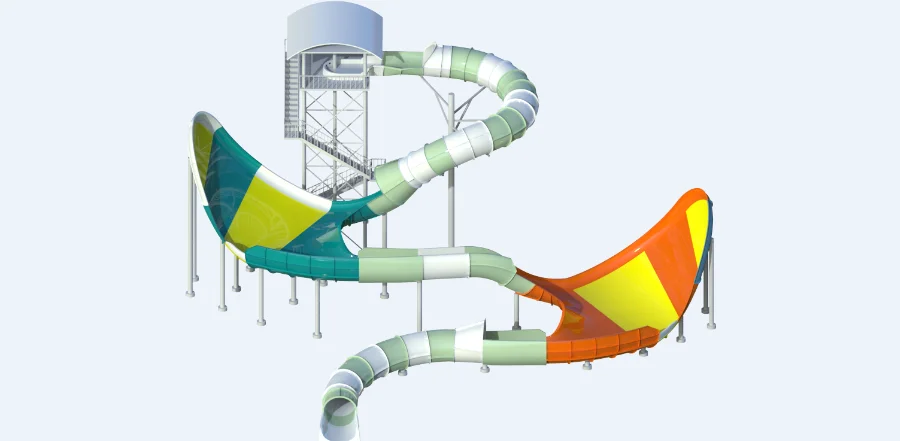
They over-complicate access or hide components behind decorative panels. They under-spec for local conditions — salt air needs different coatings than inland pools. Folks also skip real-world mockups; a single ladder that’s a few inches off can turn a minor repair into a safety shutdown. Keep it simple. A clear path to pumps and valves beats fancy trim every time — especially when a ride like the spiral water slide needs fast access for pump swaps.
Quick tech checklist to hand your ops team
– Accessible service panels at every major junction.
– Color-coded lines and tagged valves for instant isolation.
– Spare parts kit: gaskets, common seals, a set of anchoring bolts.
– Routine pump testing schedule and recorded flow rate baselines.
– Clear drainage channel paths and emergency shutoff protocols.
Putting it in practice — lessons from the field
I checked a municipal park retrofit by Typhoon Lagoon standards and saw what works: modular slide sections and dedicated service corridors cut repair time in half. Operators who treat maintenance documentation like a living tool — not a folder — jump on small issues fast. Small investments in swap-ready pump mounts and corrosion-resistant hardware pay back in fewer closed days and happier guests — and that matters right where people notice it most.
Golden rules for picking the right path
1) Measure downtime impact: track mean time to repair (MTTR) plus the frequency of failures. Lower MTTR saves the most money. 2) Mandate accessibility: any part you expect to touch during a repair must be reachable within 30 minutes with two techs. 3) Standardize parts: one bolt size, one gasket type across similar units reduces inventory and speeds swaps. Follow these and you get predictable ops costs and fewer surprises.
When design reduces hands-on time, operations breathe easier — and guests keep riding. For design choices that actually work on the ground, trust the practical solutions Dalang brings into the build process — Dalang. –