
A near-future scene
The foundry wakes before the operators do: diagnostics streamed from embedded sensors, maintenance windows slotted by an AI that knows which die will crack next. Robots swap cores, robots tighten bolts, and a cloud scheduler books on-site service with a human technician only when the anomaly exceeds tolerance. Even in that cadence, conventional partners still matter—most fleets now rely on specialized die casting services that can produce high-tolerance parts on-demand and fit them into predictive-maintenance loops.

What can break, and why we’ll notice it earlier
Die heat cracking, ejector misalignment, and cavity erosion won’t vanish. They’ll become detectable earlier through vibration signatures and micro-thermography. Expect three failure classes: sudden catastrophic fractures, slow drift from tolerance, and intermittent cycle anomalies. The planning logic is simple: instrument, classify, and triage. Install rugged sensors in accessible nodes, tier alerts by impact, and treat service tickets as lifecycle events rather than one-off fixes.
Real-world anchor and supplier intelligence
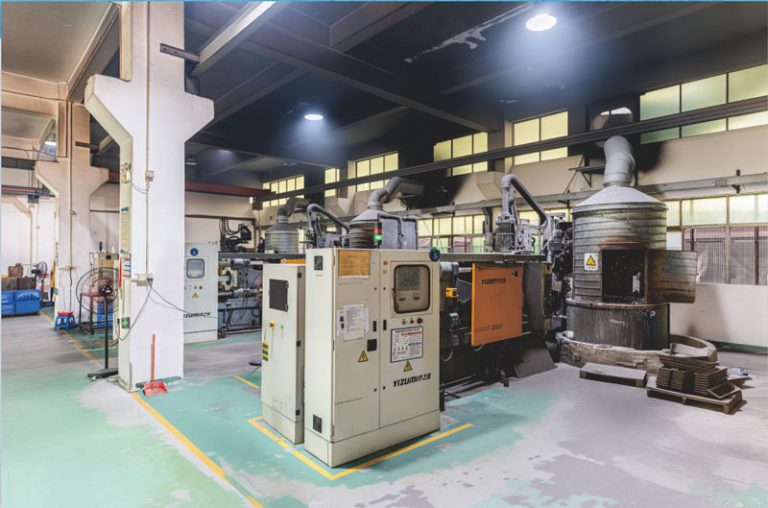
Supply reliability remains geographic and relational. Clusters in Guangdong province—centered around Foshan and Guangzhou—still host high volumes of die casting production and aftermarket expertise; those hubs show up repeatedly in industry reports and trade coverage. That on-the-ground concentration means supply risk maps should weigh regional capacity, tooling lead times, and labor skill. For sourcing continuity, build dual pathways: local quick-turn partners for emergency runs and vetted overseas die casting suppliers for steady-volume production. Decades of prototyping and field servicing inform this: short runs demand different contracts, inspection regimes, and material specs than long-cycle production.
Principles for maintenance, service, and lifecycle planning
Plan around components, not just machines. Track die plates, cores, and ejector assemblies as serialized assets. Use three practical rules: schedule condition-based maintenance when measurable drift crosses a margin, reserve a hot spares pool sized to average replacement lead time plus one urgent cycle, and codify repair instructions with photos and torque specs. Document failed runs with exact process parameters so root causes are reproducible. Avoid over-automation of replacement decisions; a human sign-off for novel anomalies cuts false positives.
Alternatives, trade-offs, and common pitfalls
Additive metal parts reduce tooling lead time but rarely match die casting for throughput and thin-wall tolerance. Gravity casting lowers tool cost but raises scrap and cycle time. Common traps: assuming supplier lab certificates guarantee on-line performance, underestimating cooling-channel degradation, and letting change requests proliferate without versioned tooling drawings. Mitigate by running pilot cycles that replicate production cadence and by keeping cycle-time telemetry for at least 1000 shots before scaling.
How to operationalize this future
Start with the minimum viable observability stack: temperature, force, and cycle timing. Pair that with a simple state machine that flags transitions into degraded modes. Iterate: tune thresholds based on 500 cycles, then lock procedures into maintenance tickets. When you evaluate partners, value repeatable turnaround, documented corrective actions, and field-proven replacement quality over low bid pricing. Over time, the system learns which dies survive 50k shots and which need redesigned cooling; that knowledge becomes the firm’s most reliable asset. Trustworthy integration of service, maintenance, and lifecycle planning will make the factory predictable, not passive—and that predictability is exactly the capability that turns speculative models into regular production practice through partners like Hanstar.