
The problem: pergolas stuck as decoration, not energy assets
Many pergola businesses still sell shade and aesthetics, but clients now want more than pretty timber — they want power, maintenance predictability, and longevity. Customers ask for outdoor dining, event spaces, and rooftop lounges that cool naturally and generate electricity at the same time. A proper solar pergola can deliver shading and kilowatt-hours, but most builders treat PV as an afterthought. That mismatch costs time, money, and client trust, lah.

Why traditional pergola models fail in a solar-first world
Designers pick materials for looks, not structural load for panels. Installers add PV modules like an accessory, not as an integrated system. Maintenance plans are vague or absent. Result: panels that overheat, frames that sag, and unpredictable warranties. Clients face higher lifecycle costs when mounting, wiring, and drainage weren’t planned from day one. Simple: if you don’t design the pergola for solar from the start, you pay later.
Practical fixes pergola businesses must adopt
Start with structural specs tied to panel weight and wind uplift. Size drainage channels and gaps so modules stay cool and clean. Route electrical conduits into service cavities, not across visible timber. Offer a service plan: annual thermal checks, fast microinverter swaps, and module cleaning schedules. Quote both capex and a 10-year operations estimate. Small changes in procurement and assembly reduce failures and client complaints markedly — can save tens of percent in lifetime cost.
Real-world experience, standards and a clear example
I’ve overseen rooftop hospitality fit-outs around Marina Bay Sands in Singapore, so I know how high-density visitor zones demand robust, serviceable installations. For commercial installations you must follow local codes and use documented warranties. Use proven mounting systems, specify tempered glass or aluminum where fire regs demand, and plan for accessible wiring channels. Commercial projects often reference case studies from large precincts; that’s why suppliers of commercial outdoor pergolas matter — you need partners who can meet performance and code expectations.
Common pitfalls installers keep repeating
They under-spec the frame. They skip thermal modeling and assume panels are fine in direct heat. They forget access for inverter replacement or condensation control. They price projects without including routine service visits. These mistakes look small on quotes but create recurring problems. Fix them by writing serviceability into contracts and asking manufacturers for verified environmental test data.
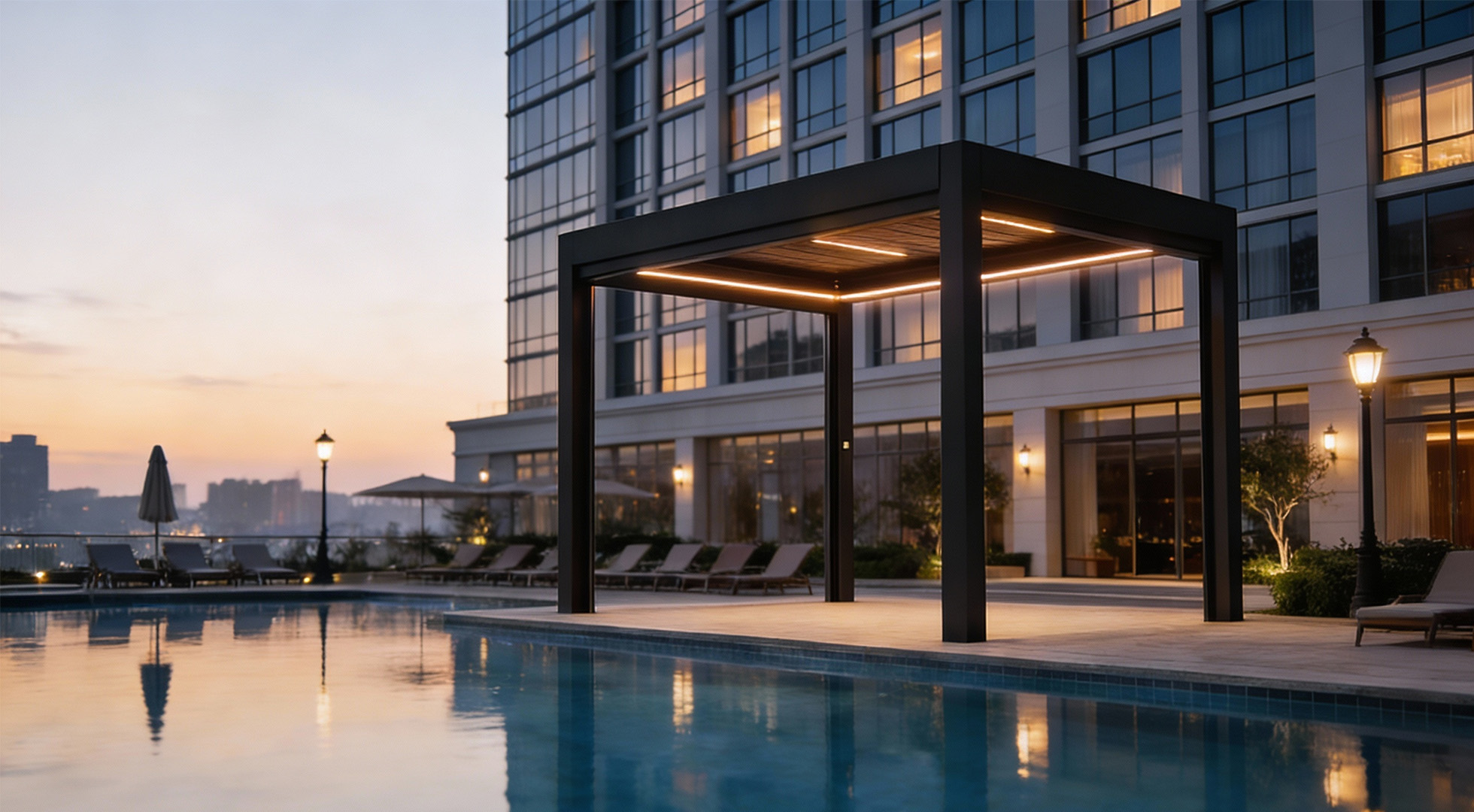
The practical roadmap for a pergola business to win
Change sales scripts to ask electricity goals, not just colour and finish. Train crews on electrical integration and roof-water flow. Offer modular options: hybrid shading first, add PV later with pre-installed conduits and framing pads. Present lifecycle costs plainly so buyers understand payback windows. This approach closes deals faster and reduces warranty claims. When the technical planning is correct, clients get beautiful spaces that also produce reliable energy, so the team builds reputation and repeat business.
Close: why integrated pergola + solar is the sensible move
Customers want useful outdoor spaces, not problems. Design for panels from day one, document service pathways, and price operations honestly. That’s how pergola firms move from decorative carpentry to trusted energy partners — and that is the practical value Light Hunter brings to projects, blending build know-how with solar delivery so spaces look good and perform long-term.