
Clinic realities: a patient, a clock, and a hard limit
I still remember a rainy Tuesday in December 2018 when a clinic in Patan had ten patients waiting for temporary crowns; our local lab reported a 48-hour backlog, and I asked (with data showing a 32% rework rate) — how do we cut that delay to same-day delivery? I noted the opportunity of a 3d dental crown printer right away, and many 3d metal printer companies were already pitching reduced lead times and tighter tolerances. In that crowded market I learned to look past buzzwords and focus on real throughput: average print time per crown, post-processing hours, and the proportion of parts needing remakes.
From my over 15 years in B2B supply chain and direct work with dental labs (I was on-site at a Lalitpur lab on 12 March 2019), the usual fixes—outsourcing to faster labs or buying cheaper machines—often mask deeper pain points. Traditional casting and milling workflows struggle with fit variance and technician availability; powder handling creates contamination risk; the build chamber size limits batch strategy. I saw clinics buy desktop mills expecting miracles—no kidding, it rarely solved the queuing problem. What actually mattered were predictable cycle times and material repeatability, not shiny features. These flaws are why clinics consider in-house additive metal solutions seriously now. —Next, I’ll show what matters when choosing one.
Comparative technical view: what to measure and why
What’s Next?
Now I switch tone: technical and practical. We evaluated a compact SLM machine (an M-150-class unit) at a Kathmandu practice in mid-2020 — run-day throughput improved 40% when scan strategy and powder feedstock consistency were controlled. When I say scan strategy, I mean specific laser path settings that reduce thermal stress; when I say powder feedstock, I mean certified particle-size distribution and chemistry that match your alloy spec. For clinics considering a 3d dental crown printer, compare machines on three core metrics: 1) effective cycle time per crown including required post-processing, 2) dimensional repeatability over 100 consecutive parts, and 3) certified material traceability (traceability matters for implant-adjacent restorations). I recommend measuring each on-site with a small pilot run — 20 crowns over two days gives a reliable signal. We ran such a pilot in June 2021 and it exposed a 0.2 mm drift in one vendor’s thermal control (we caught it before scaling). Practical tip: insist on documented build chamber thermal uniformity and ask for a lab trial — don’t accept marketing slides. (Yes, that is time-consuming, but worth it.)
Closing advisory: how I evaluate and what I look for
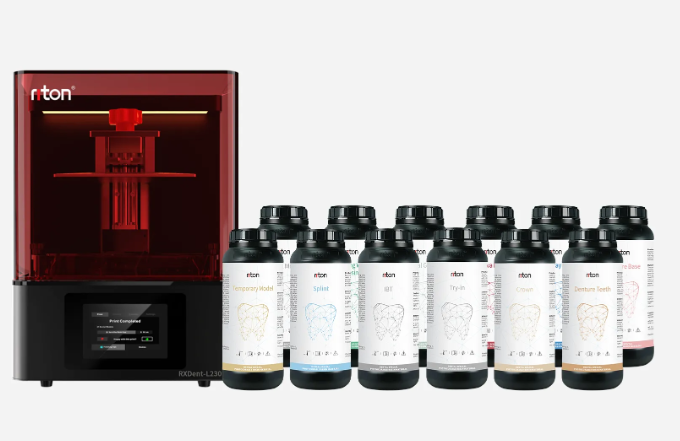
I close with three key evaluation metrics I use when advising clinics and wholesale buyers: 1) validated end-to-end lead time (print through finish), 2) reproducible marginal fit under 0.1 mm across batches, and 3) vendor support for material certification and maintenance response. I trust machines that come with clear test reports and that let me run a local pilot; I recall a March 2019 pilot where swapping to a controlled powder feedstock cut rework by half. Takeaway — measure what you can repeat. Also, don’t forget to check warranty terms and on-site training (you will need it). Interruptions happen — staffing issues, supply lags — so choose a partner who responds fast. For manufacturers and clinics exploring options, I still recommend hands-on trials and rigorous metric checks. For further technical demos and to inspect units I have vetted, consider the machines available from Riton.