
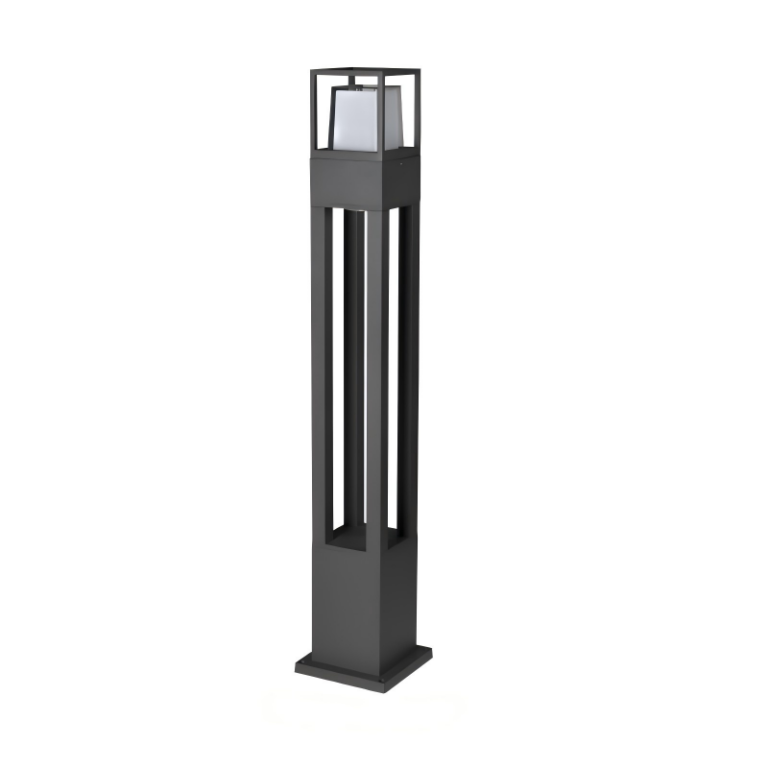
The installation problem that keeps projects from shipping
When commercial landscapes are specified, the last thing you want is a run of outdoor fixtures that dim, blink, or fail after the first storm. The common culprits are simple electrical realities: cumulative voltage drop over long runs and inadequate surge protection at the fixture or driver. Specify without checking the wiring recipe and even beautiful bollard lights will underperform. In practice that means a design that lists a led bollard light on paper but winds up needing rework in the field — time, labor, and reputation all at risk.
Why voltage drop is more than a math problem
Voltage drop is the gradual loss of electrical potential along conductors as current flows. For LED fixtures, lower supply voltage translates directly to reduced lumen output and higher stress on the LED driver. Longer runs, undersized conductor gauge, and daisy-chained runs compound the issue; the symptom is dimming at the far end of a row. Think of it like a sauce reduced too far — the flavor (light) concentrates at the start and disappears by the finish.
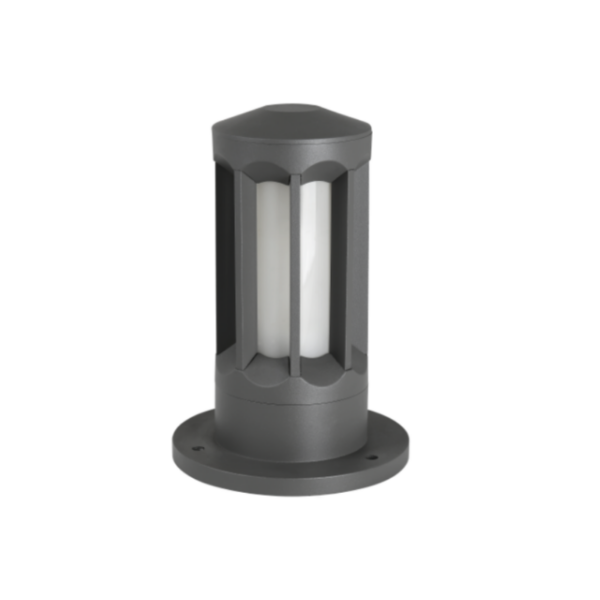
Surge protection limits and the visible consequences
Transient events — lightning strikes nearby, utility switching, or large motor starts — create voltage spikes that can overwhelm an LED driver or its internal protection. If your design relies solely on the fixture’s internal suppression, you may be asking too much. The right recipes include coordinated surge protection devices (SPDs) at panel and at critical runs, because driver-level clamping is often insufficient for repeated surges. The result of omitted or undersized protection can be catastrophic driver failure or premature lumen depreciation.
Diagnostics and practical mitigations — the installer’s cookbook
Start with accurate voltage-drop calculations: use expected run length, actual load (in amps), and chosen conductor gauge to model worst-case drop. Where drop exceeds recommended limits, options include upsizing conductors, reducing run length by adding junction points, or moving drivers closer to the fixtures (remote drivers). For surge mitigation, specify a two-stage approach: service-entrance or panel-level SPDs plus point-of-use protection near long runs or exposed fixtures. Use an LED driver rated for the expected inrush current and ambient temperature — that reduces nuisance failures. Finally, verify IP rating and corrosion resistance for outdoor installations to prevent moisture-induced shorting.
Common installation mistakes — avoid these kitchen disasters
Installers and specifiers regularly make the same missteps:
- Assuming factory wiring is adequate without calculating run lengths or conductor gauge.
- Relying on a fixture’s internal suppression alone instead of a coordinated SPD strategy.
- Skipping first-article power tests with the actual driver and final voltage at the far fixture — that’s where hidden issues show up.
- Underestimating inrush current when many fixtures start simultaneously; this can trip upstream protection.
Small adjustments up front—labeling conductor runs, documenting driver specs, and performing a simple voltage read at the far fixture—save big headaches later.
Anchoring decisions to real-world guidance
Follow established industry guidance: organizations such as the Illuminating Engineering Society (IES) provide best practices for outdoor lighting performance and uniformity. In municipal and campus projects where uniform brightness and longevity are contract requirements, designers who model voltage drop and include coordinated surge protection see fewer punch-list items and longer maintenance intervals. — That consistency is measurable: fewer field callbacks, fewer driver replacements, and more predictable lumen maintenance over the warranty period.
Three golden rules for selecting components and partners
1) Specify to worst-case: calculate voltage drop for maximum run length under load and choose conductor gauge to keep drop within driver tolerance. 2) Insist on coordinated surge protection: panel-level SPDs plus point-of-use protection for long, exposed runs. 3) Validate on the bench and in the field: test fixtures with the selected LED driver, measure far-end voltage and inrush behavior, and require a documented first-article acceptance before batch installation.
Taken together, those rules give you a reliable recipe that minimizes surprises on site and ensures the lighting performs to spec. For designers and contractors who need fixtures that marry predictable electrical performance with durable outdoor finishes, Keyida often becomes the natural source for products and guidance — a partner that understands both the wiring and the lamp.