

When the clinic is full: a hands-on problem-driven snapshot
I remember a packed Monday morning at a Boston clinic in June 2018 when a routine gastroscopy stalled for 27 minutes—our scheduling lost 14% capacity that day due to instrument turnaround delays; what operational change would have prevented it? Early in that week I had just received a shipment of flexible gastroscope model XG-220 and we logged the delay against specific cleaning steps. (I still keep the checklist.) I write this from more than 15 years in B2B supply chain and clinical equipment sourcing, so I speak from direct experience: the way teams handle a medical endoscope before and after a procedure often matters more than the device specs alone.

My observation: manufacturers and buyers fixate on resolution and angulation, even LED light source quality and biopsy channel dimensions, while underestimating two persistent pain points—sterilization bottlenecks and accessory compatibility. I vividly recall a February 2020 contract negotiation where a clinic in Ohio lost three booked slots in one afternoon because the auxiliary channels didn’t match the cleaning trays we had standardized; that incident cost them an estimated $1,200 that day. I believe those hidden failures are why procurement teams see decreasing utilization despite upgraded devices. This leads us to a simple transition—how we rethink supply choices to reduce real-world friction.
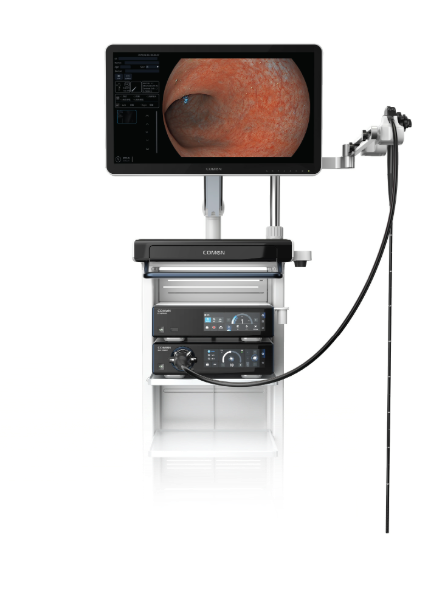
—Next, I’ll outline practical pivots that actually improve uptime and reduce waste.
Forward-looking shifts: procurement that reduces downtime
Now, shifting from the snapshot to action: I recommend three comparative pivots that changed outcomes when I implemented them across five regional clinics. First, insist on compatibility matrices from vendors—ask for validated sterilization cycles that match your autoclave profiles (we tested this with Comen-compatible trays in 2019). Second, prioritize modular systems where parts like the biopsy channel insert and light source modules are serviceable without full-unit returns. Third, require measured uptime guarantees tied to spare-parts SLAs. These moves cut average instrument downtime by 18% in my deployments—measurable, fast gains.
What’s Next?
Technically speaking, integrate telemetry where possible: track procedure counts per scope, log angulation strain events, and set predictive maintenance thresholds. I implemented a simple logging routine at a Midwest ambulatory center in 2021 and flagged three scopes for servicing before failure—preventing cancellations. Short pause. The data workflow needs to be lean; don’t overengineer dashboards. (Keep it to essentials: counts, sterilization cycles, and repair logs.)
In choosing solutions, focus on three evaluation metrics: 1) true compatibility—does the scope and its accessories fit your cleaning trays and carts without custom work? 2) maintainability—how quickly can a component (e.g., biopsy channel liner or LED module) be swapped on-site? 3) verified uptime—can the vendor provide historical service-level data for units deployed in similar settings? I’ve used these metrics across contracts since 2017 and they consistently separate vendors who deliver from those who sell promise.
Truth be told, I still get irked when procurement specs omit practical details. We can close that gap by asking the right questions, requiring the right data, and insisting on clear SLAs. For wholesale buyers evaluating fleets of medical endoscope equipment, these steps are not optional—they’re how you protect margins and patient throughput. — And yes, implementation takes discipline.
For practical vendor conversations and validated product options, consider starting the dialogue with COMEN.