
Introduction — Why does this keep failing?
Ever notice how every plant claims “clean air” until someone opens a soldering station and the truth sneaks out? Why does a system that was supposed to solve contamination suddenly act like a suggestion? In both small labs and large assembly lines, fume extraction for electronics and industrial applications gets mentioned at the design table, then quietly sidelined when budgets get tight.
I’ve watched teams buy the cheapest hood, assume HEPA filters are a silver bullet, and then — surprise — workers complain of headaches and PCBs get pitted. The data isn’t flattering: studies show captured particulate can still re-enter workspaces if flow balance is wrong. So what’s going on with our so-called solutions (and no, duct tape won’t fix a bad duct layout)?
I’ll be blunt: I’ve seen “solutions” that ignore real-world dynamics — placement, maintenance, and the weird stuff machines do under load. I use terms like local exhaust ventilation and differential pressure sensors because they matter in practice. We’ll dig into why the usual fixes fail and what to watch for next. Now let’s move into the gritty layer — the one vendors rarely advertise.
Part 2 — Where most systems break (traditional solution flaws)
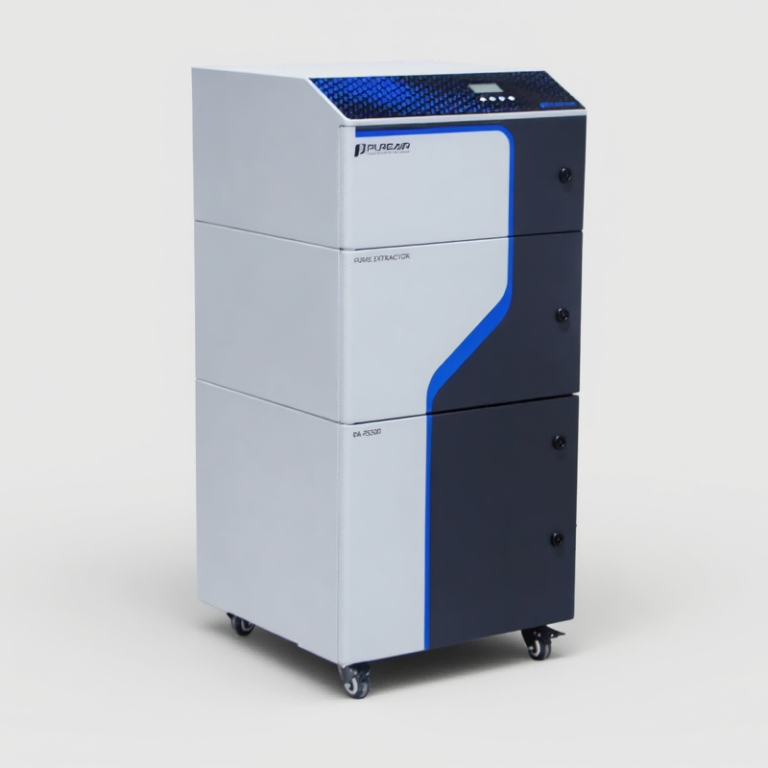
When I say “fume and dust extraction,” I mean the whole system — capture, transport, and filtration. fume and dust extraction systems often look great on paper: big CFM numbers, shiny filters, and a brochure full of test curves. But in the shop? Performance drops fast. Many systems assume perfect hood placement, constant air loads, and zero obstructions. Reality interrupts. Cabling, fixtures, and even a tired operator leaning on a hood change flow patterns. That kills capture efficiency.
What exactly fails?
First, hood geometry is underestimated. A small change in angle, and the plume escapes. Second, filter selection gets lazy: using a standard HEPA for solvent-laden fumes without activated carbon is like using a raincoat for a leaky roof. Third, maintenance schedules are aspirational — filters load, fans cavitate, and differential pressure sensors are ignored. I’ve tracked systems where a clogged pre-filter raised static pressure, reduced flow, and dumped particulates back into the room. Look, it’s simpler than you think: if you don’t measure actual face velocity at the hood, you don’t have a system — you have a hope.
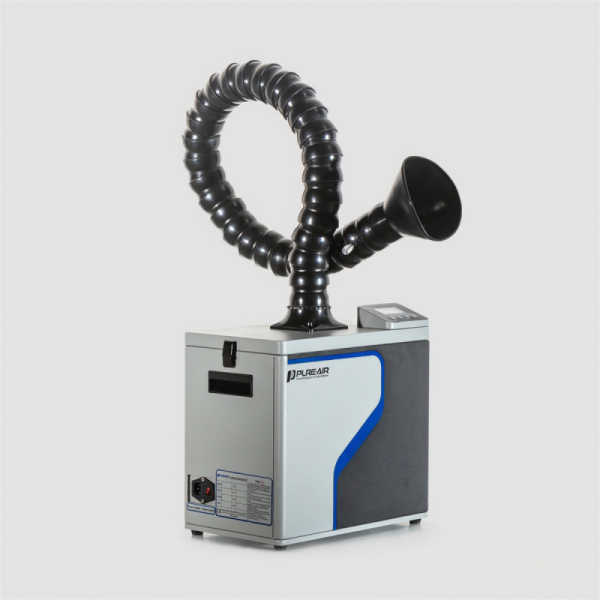
Also, don’t forget auxiliary tech. Edge computing nodes and smart monitors can flag drift before you smell it. Yet shops rarely integrate them. Why? Cost, complexity, and a belief that “we’ve always done it this way.” That’s not a plan. Be wary of vendors who sell a box and call it solved. Real solutions combine good capture design, the right filters, and hard data from operational sensors. — funny how that works, right?
Part 3 — New principles and how to evaluate future systems
Looking forward, I focus on three new principles that matter: adaptive capture, smart filtration, and measurable outcomes. Adaptive capture means systems that adjust fan speed or hood geometry based on real-time plume behavior. Smart filtration layers HEPA with targeted adsorption media for solvents and flux. Measurable outcomes require sensors — PM monitors, VOC sensors, and pressure transducers — tied to alerts and logs. Together, these cut both emissions and downtime.
What’s Next?
Take the example of a modern line that uses predictive maintenance. Fans run just hard enough. Filters are changed when sensors show rising delta-P, not by calendar. The result: longer filter life, fewer upset events, and cleaner solder joints. I’ve seen yields improve when manufacturers treat extraction as part of process control rather than an add-on. That’s a shift — from “install and forget” to “monitor and manage.”
To choose a system, here are three metrics I always use: capture efficiency at the workface, system responsiveness (how fast fans and dampers adjust), and total cost of ownership (including filter, energy, and downtime). Ask your vendor for live data or trial installations. If they push brochures instead of measurement, walk away. You want a partner that shares logs, not just slides.
We’ve covered the problems, the technical flaws, and the better principles to aim for. I’m not selling a miracle. I’m telling you what I’d look for if I were running your line. Practical, measurable, and a little stubborn about doing it right. For tools and products that match these ideas, check vendors that take monitoring seriously — for example, PURE-AIR.